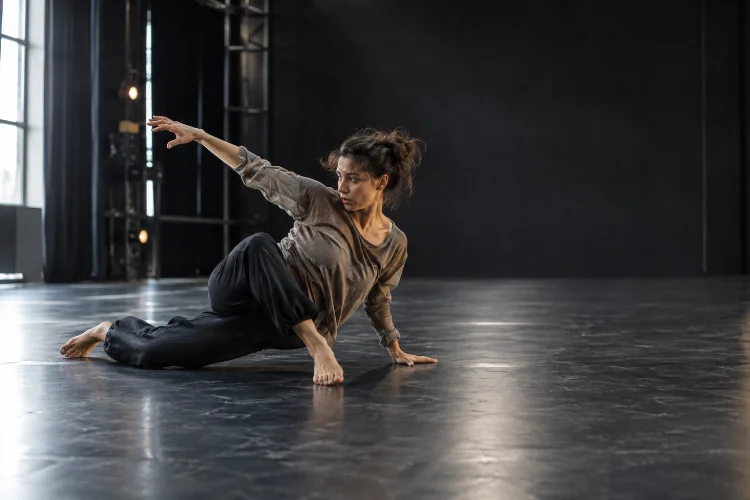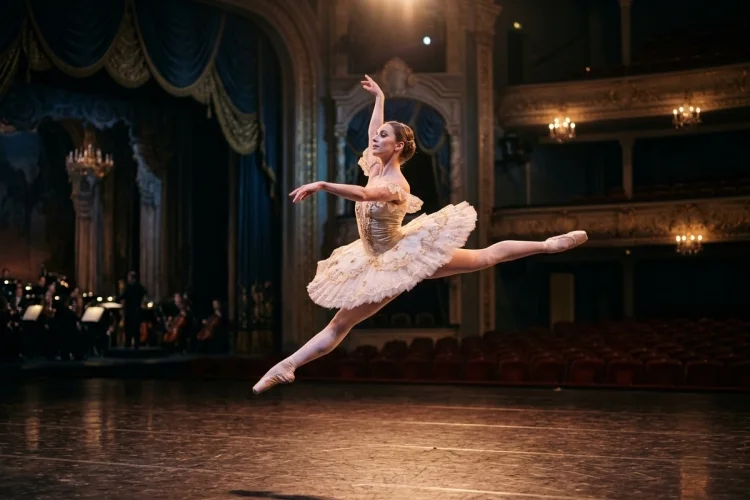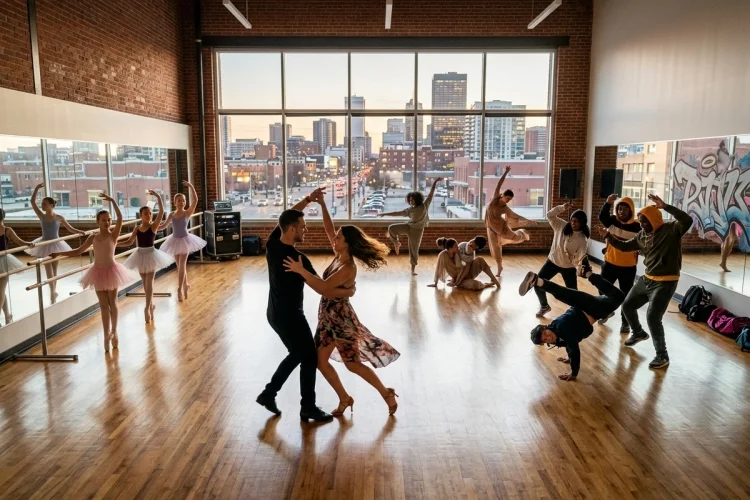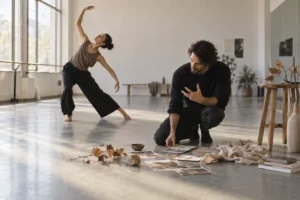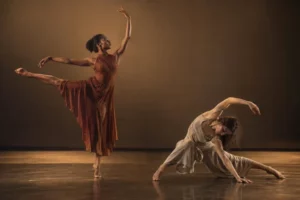
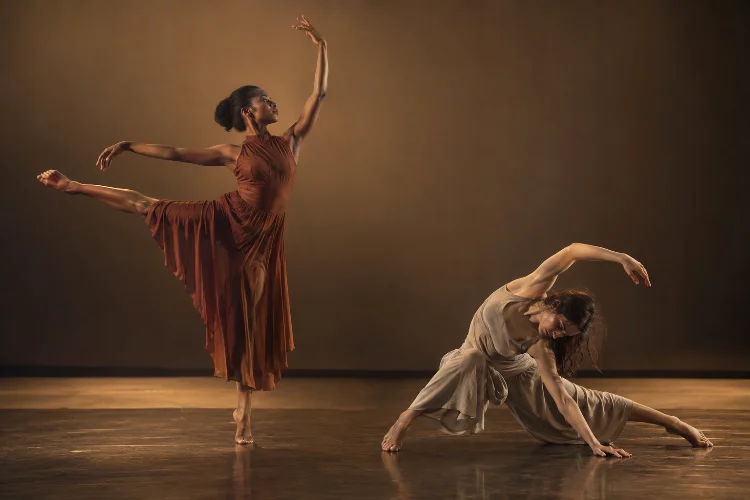
Put two dance performances side by side and you may struggle to tell which one is modern dance and which one is contemporary dance.
Both can feature barefoot dancers, expressive movements, unusual body positions, dramatic floor work, and choreography that looks very different from classical ballet.
So, what is the real difference?
Understanding Modern Dance vs. Contemporary Dance becomes much easier when you look at where each style came from.
Modern dance developed mainly during the late nineteenth and early twentieth centuries as artists searched for alternatives to the rules and traditions of classical ballet.
Contemporary dance appeared later and became even more open to mixing different techniques and artistic influences.
Today, the boundary between them can sometimes feel blurry. A contemporary dancer may use techniques created by modern dance pioneers, while a modern dance performance can look surprisingly experimental.
Still, the two styles have different histories, philosophies, training methods, and approaches to choreography. Knowing those differences can help dancers, students, and curious audiences understand what they are actually watching.
What Is Modern Dance?
Modern dance is a theatrical dance tradition that developed largely as an alternative to classical ballet. Early pioneers wanted more freedom to express emotions, ideas, and natural human movement rather than relying entirely on established ballet vocabulary.
Artists including Isadora Duncan, Ruth St. Denis, Doris Humphrey, and Martha Graham played major roles in shaping the form.
Martha Graham became particularly influential. The Library of Congress describes Graham as an important figure in twentieth-century modern dance whose emotionally charged movement language helped establish modern dance as a distinct art form.
Modern dance eventually developed several recognizable techniques. Graham technique, for example, became famous for concepts such as contraction, release, breath, and expressive use of the torso.
Other choreographers developed their own approaches, which means modern dance itself has never represented just one system.
What Is Contemporary Dance?
Contemporary dance is harder to place inside a single definition because flexibility is one of its defining qualities.
Rather than following one established technique, contemporary dancers may combine elements of modern dance, ballet, release technique, improvisation, floor work, jazz, theater, and other movement traditions.
Rambert describes contemporary dance as an evolving form associated with fluidity, experimentation, improvisation, emotional expression, and freedom of movement. It also notes that what counts as “contemporary” can change over time because the term is closely connected to artistic ideas of the present.
That means two contemporary dance performances may look completely diferent.
One might include elegant ballet-inspired lines and controlled jumps. Another could involve dancers crawling, sliding, falling, speaking, interacting with objects, or moving in silence.
The style is less about following one movement vocabulary and more about exploring possibilities.
The Biggest Historical Difference
The easiest way to understand the distinction is through history.
Modern dance came first.
During the early twentieth century, many modern dance pioneers deliberately challenged the aesthetics and traditions associated with European classical ballet. They wanted dance to communicate experiences and emotions in new ways.
Modern dance eventually created its own techniques and traditions.
Contemporary dance developed later from an environment in which those earlier rules had already been questioned. Instead of simply rejecting ballet, contemporary choreographers became increasingly willing to borrow from almost anything that served their artistic purpose.
Dance Consortium describes contemporary dance as an evolving international field connected to earlier modern dance pioneers but constantly shaped by artists searching for new approaches to movement.
In simple terms, modern dance helped break the rules. Contemporary dance inherited that freedom and continued expanding what the rules could be.
Modern Dance vs. Contemporary Dance Techniques
Technique is another important area where the two styles differ.
Modern Dance Often Uses Established Systems
Many modern dancers train in specific methods created by influential choreographers.
Graham technique is one famous example. Other traditions include Humphrey-Weidman, Limón, and Cunningham-based approaches.
These systems can have recognizable principles that students repeatedly practice. A dancer studying one tradition may spend significant time developing a particular relationship with gravity, breath, alignment, rhythm, or the torso.
Merce Cunningham provides an interesting example of how modern dance continued evolving. Cunningham Technique develops strength and flexibility while emphasizing movement of the spine and legs, spatial awareness, changes of direction, and rhythmic precision.
Contemporary Dance Mixes Techniques More Freely
Contemporary training often pulls ideas from several systems.
For example, a contemporary class may begin with release-based exercises, continue with Cunningham-inspired spinal movements, move into floor work, and finish with improvisation or choreography.
The Place’s contemporary beginner courses illustrate this mixture. Its classes combine Cunningham concepts such as curves, tilts, twists, and arches with release techniques that emphasize breath and flowing movement.
This hybrid approach is one of the strongest characteristics of contemporary training.
How Movement Quality Looks Different
Modern and contemporary dancers may perform similar movements, but the intention behind them can be different.
Modern dance often emphasizes a clearly developed movement philosophy. Depending on the technique, dancers may work with contraction, suspension, fall and recovery, weight, opposition, or dramatic expresion.
The movement can feel grounded and emotionally purposeful.
Contemporary dance often expands this vocabulary through greater experimentation. Dancers may deliberately shift between tension and relaxation, move rapidly from standing to the floor, use unexpected body shapes, or explore unconventional ways of transferring weight.
Floor work is especially common.
Instead of treating the floor as something dancers simply stand on, contemporary choreography may use it almost like another partner. Rolling, sliding, spiraling, collapsing, and pushing away from the ground can become central parts of a movement phrase.
That does not mean every contemporary piece uses floor work, but it is frequently found in the style.
Music, Rhythm, and Choreography
Music offers another interesting comparison.
Traditional choreography often creates movement closely around musical rhythm. Modern dance expanded that relationship, and choreographers began exploring different ways movement could interact with sound.
Merce Cunningham pushed this idea much further.
Working with composer John Cage, Cunningham explored the idea that dance and music could be created independently and simply exist together during a performance.
He also famously used chance operations to determine elements such as movement sequences, timing, dancers, and spatial arrangements.
Those experiments had an enormous influence on later dance-making.
Contemporary choreography can now be performed to almost anything: classical music, electronic soundscapes, pop songs, spoken words, environmental noises, live musicians, or complete silence.
Sometimes choreography follows the beat closely. Other times, dancers intentionally move against it.
The music does not always control the movment.
Expression and Improvisation
Both dance forms value artistic expression, but contemporary dance often gives improvisation a particularly visible role.
In a contemporary class, dancers might be given a task instead of a sequence of steps.
For example, an instructor might say, “Imagine your right shoulder is pulling the rest of your body through the room.”
There is no single correct response.
One dancer might create slow circular movements, while another produces sharp changes in direction. That process encourages performers to develop an individual movement vocabulary.
Improvisation can also become a choreographic tool. Dancers may experiment for several minutes before a choreographer selects interesting gestures and organizes them into a finished piece.
Modern dance can certainly involve improvization too, but many historically established modern techniques have a more recognizable training structure.
Is Contemporary Dance Harder Than Modern Dance?
Neither style is automatically easier.
The difficulty depends heavily on the technique, choreography, teacher, and dancer.
A structured modern dance class can demand impressive strength, coordination, flexibility, musicality, and technical accuracy. Graham or Cunningham training, for instance, requires significant physical control.
Contemporary dance presents different challenges.
Because contemporary dancers often switch between standing movement, floor work, jumps, improvisation, and unusual weight transfers, they need adaptability as well as strength and coordination.
Creative decision-making can also feel difficult for beginners.
Someone accustomed to being told exactly where to place every arm and foot may initially find an open instruction such as “explore the space” surprisingly uncomfortable.
With practise, however, that freedom usually becomes much easier to navigate.
Which Dance Style Should You Learn?
If you are choosing your first dance class, your goals matter more than deciding which style is objectively better.
Modern dance may appeal to you if you enjoy learning a defined technique, studying dance history, and understanding how influential movement systems were developed.
Contemporary dance may suit you if you enjoy experimentation, floor work, creative exercises, varied movement styles, and improvisation.
But you do not necessarily need to choose only one.
In fact, studying modern dance can give contemporary dancers a valuable technical foundation. Contemporary training can also help modern dancers become more adaptable and comfortable exploring unfamiliar movement ideas.
Watching professional performances can help too. Compare different choreographers and notice how they use space, gravity, rhythm, breath, music, and emotion.
Over time, the distinction becomes easier to recognize.
The debate around Modern Dance vs. Contemporary Dance is not really about deciding which form is better. The key difference lies in their history and artistic approach.
Modern dance emerged as a major challenge to classical ballet and eventually developed influential techniques associated with artists such as Martha Graham and Merce Cunningham.
Contemporary dance built upon that history while becoming increasingly flexible, experimental, and open to influences from many movement traditions.
Today, the boundaries can overlap, which is exactly why the two forms are so interesting.
If you want to understand the difference beyond definitions, watch performances from several choreographers-or better yet, try both types of classes yourself.
Experiencing the movement firsthand is one of the best ways to discover how each style feels, communicates, and approaches the possibilities of the human body.