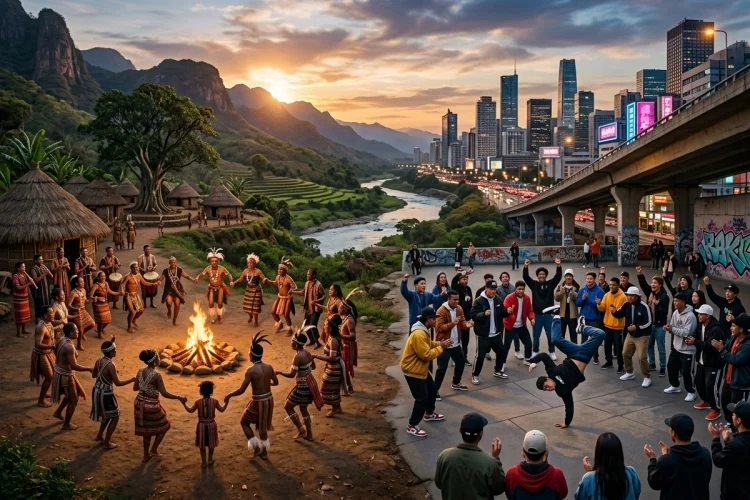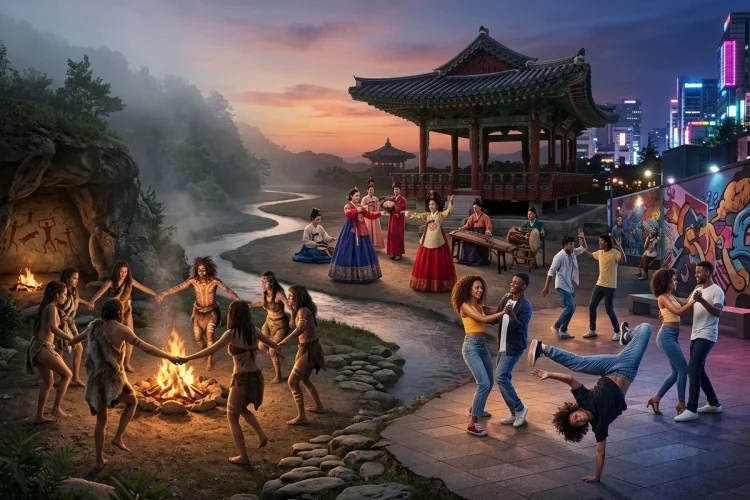
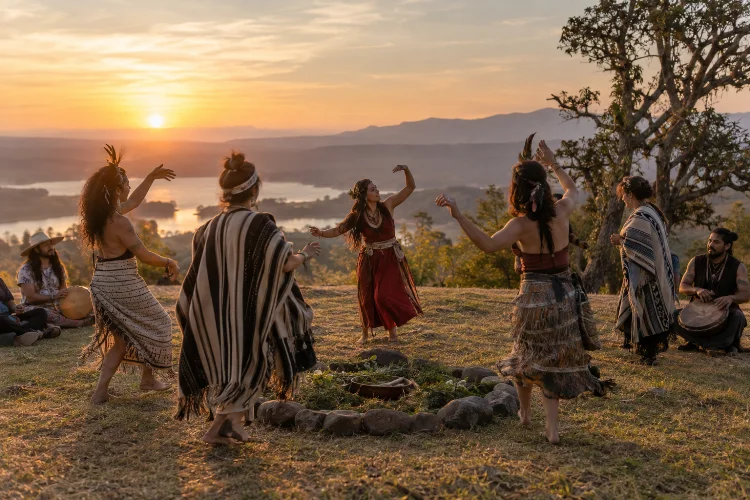
Long before dance became something people watched on theater stages, television screens, or social media, it was already part of some of humanity’s most meaningful communal experiences.
People have danced to celebrate harvests, honor ancestors, welcome important visitors, mark marriages, ask for protection, accompany religious practices, and recognize major transitions in life.
In many cultures, movement was never separated neatly into categories such as “entertainment,” “religion,” and “community life.” Dance could serve several of those purposes at once.
Understanding how dance has been used in rituals and ceremonies therefore reveals much more than the history of performance.
It shows how communities have used movement to communicate beliefs, strengthen relationships, preserve traditions, and give physical form to ideas that may be difficult to express through words alone.
These practices are also far from identical. A ceremonial dance in Peru, India, Burundi, or an Indigenous community in North America can carry very different meanings. Looking at those differences helps us appreciate dance as a deeply varied form of cultural expression.
Why Dance Became Part of Ritual Life
Dance has several qualities that make it particularly useful in ceremonies.
Movement can be performed collectively, repeated in recognizable patterns, combined with music, and connected to specific places or moments. When dozens of people move or respond to the same rhythm, the experience can create a powerful feeling of shared participation.
Dance also communicates without depending entirely on spoken language.
A gesture may represent respect, authority, mourning, celebration, spiritual connection, or a relationship with the natural world. The exact meaning depends on the culture performing it.
This is why ritual dance should not be understood simply as decorative entertainment added to a ceremony. In many traditions, the movement itself is part of what makes the event meaningful.
The Smithsonian’s National Museum of the American Indian, for example, describes music and dance as essential elements of the spiritual, cultural, and social lives of Native peoples across the Americas.
Ceremonial dances can strengthen connections with community, ancestors, the earth, and spiritual life.
Dance as a Connection to Spiritual Beliefs
One of the oldest and most widespread functions of ceremonial dance is its connection with spiritual or religious belief.
Movement may accompany prayer, storytelling, offerings, sacred music, or dramatic representations of religious narratives. In these situations, dancing is not necessarily performed primarily for an audience. It may instead form part of a larger spiritual practice.
A good example is Mudiyettu, a ritual dance drama from Kerala, India. The tradition dramatizes the mythological battle between the goddess Kali and the demon Darika and involves participation from the wider village community after the summer harvest.
UNESCO inscribed Mudiyettu on the Representative List of the Intangible Cultural Heritage of Humanity in 2010.
The example demonstrates how dance can connect mythology, religion, community participation, theater, and seasonal activity within one practice.
In other traditions, dancers may symbolically communicate with ancestors or spiritual forces. These beliefs should be understood within their own cultural contexts rather than treated as universal explanations for ritual dance.
Dance in Rites of Passage
Human societies often create ceremonies around important changes in a person’s social life.
Birth, initiation, adulthood, marriage, leadership, and death can all be marked through ritual activity. Dance may help make these transitions visible to the wider community.
A rite of passage is especially powerful because it does not concern only the individual. It can also confirm that the community recognizes someone’s new responsibility, age, role, or status.
The Mwazindika spiritual dance of Kenya’s Daida community illustrates this broader ceremonial role.
According to UNESCO, the tradition combines movement, music, ritual, and storytelling and can be performed during events including rites of passage, harvests, coronations, droughts, and floods.
In cases like this, dance becomes part of the social language surrounding change.
The exact steps may matter, but so do the people who perform them, the location, music, clothing, timing, and reason for the ceremmonial gathering.
Harvests, Seasons, and the Natural World
Many traditional societies historically depended closely on agricultural cycles, seasonal change, rain, animals, and local ecosystems.
It is therefore unsurprising that dance became connected with harvest celebrations, fertility traditions, seasonal festivals, and ceremonies involving natural forces.
The Smithsonian notes that traditions across the Americas have connected dance with life-generating forces such as rain and maize. Such ceremonies can link human movement with ideas about land, food production, spirituality, and survival.
Europe also offers historical examples.
Romania’s Căluş ritual includes dance, games, songs, and music. UNESCO explains that the tradition probably developed from older purification and fertility practices and incorporates symbolism associated with the horse.
These examples show why traditional dance cannot always be separated from environmental history. Movement may communicate how a society understands its relationship with land, seasons, animals, and forces beyond human control.
Dance as a Way to Build Community
Ceremonies bring people together, and synchronized movement can strengthen that experience.
Participants may dance in circles, lines, groups, pairs, or structured formations. Repeated rhythms allow people to coordinate their bodies with others, creating a visible sense of cooperation.
Burundi’s Ritual Dance of the Royal Drum is a striking example. The tradition combines synchronized drumming, dancing, songs, and heroic poetry. It is performed during occasions such as local or national celebrations and the welcoming of important visitors.
UNESCO also highlights its role in bringing together people from different generations and backgrounds while encouraging social cohesion. The tradition is passed down through practice as well as education.
That generatons-to-generations transmission matters.
When younger community members learn a dance from elders, they are not simply memorizing movements. They may also learn music, values, history, clothing traditions, social roles, and appropriate ceremonial behavior.
Dance Can Represent Authority and Social Order
Ritual movement sometimes communicates who holds authority within a community.
A dancer’s costume, position, gestures, or relationship to other performers may symbolize political, spiritual, or social responsibility.
The Huaconada ritual dance of Mito in Peru offers a fascinating example. During the first three days of January, masked dancers known as huacones perform in the town.
They symbolically represent a former council of elders and become the community’s highest authority during the ritual period.
Even differences in movement communicate hierarchy.
UNESCO explains that older huacones have greater freedom to improvise, while younger or modern huacones perform more circumscribed steps around them.
Dance here functions almost like a moving social map. Who moves, how they move, and where they move can symbolicly communicate status and responsibility.
This reminds us that choreography can carry political and social meaning without needing spoken explanation.
Ceremonial Dance Helps Preserve Cultural Identity
Ritual dances can also function as living archives.
Unlike written documents stored in libraries, these archives exist through bodies, music, stories, costumes, memories, and repeated community practice.
The Smithsonian’s Circle of Dance exhibition highlighted ten Native social and ceremonial dance traditions from across the Americas. It emphasized that such dances continue to provide ways for communities to express tribal, village, clan, social, and individual identities.
This preservation has sometimes happened despite outside pressure.
The Smithsonian notes that Indigenous dances were historically discouraged or outlawed for long periods in parts of the Americas under church and government “civilization” policies. Many communities nevertheless continued or later revitalized their dance traditons.
That history makes cultural preservation especially important.
Keeping ceremonial movement alive is not simply about recreating the past. Communities can preserve older practices while adapting them to contemporary circumstances.
Tradition does not necessarily mean something frozen in time.
Ritual Dance Is Not Always a Public Performance
Modern audiences are used to thinking of dance as something performed for spectators.
Ritual dance may work differently.
Some ceremonies welcome visitors, while others may be limited to members of a particular community, age group, gender, religious group, or initiated participants. Certain movements, songs, objects, or locations may also carry meanings that outsiders are not expected to reproduce casually.
This makes cultural context important when learning about ceremonial dance.
Watching a short online video does not automatically explain what a movement means or whether it is appropriate to copy it. A respectful approach involves learning who performs the dance, why it is performed, when it occurs, and what the relevant community says about it.
The same principle applies to costumes and sacred objects.
What may appear to an outsider as an interesting visual accessory may have ceremonial significance to the people who use it.
Understanding that context makes appreciation more meaningful and prevents cultural practices from being reduced to simple entertainment.
Exploring how dance has been used in rituals and ceremonies shows that movement can serve purposes far beyond performance.
Across different societies, dance has helped people express spiritual beliefs, recognize life transitions, celebrate harvests, communicate authority, strengthen community relationships, and preserve cultural identity.
There is no single universal meaning of ritual dance. Every tradition emerges from its own history, beliefs, environment, and social structure.
That diversity is exactly what makes the subject so fascinating.
The next time you encounter a traditional or ceremonial dance, look beyond the visible choreography. Ask who performs it, when it takes place, what it represents, and how the community itself understands the practice.
Those questions can transform dance from something you simply watch into a doorway for understanding history, identity, and human culture.