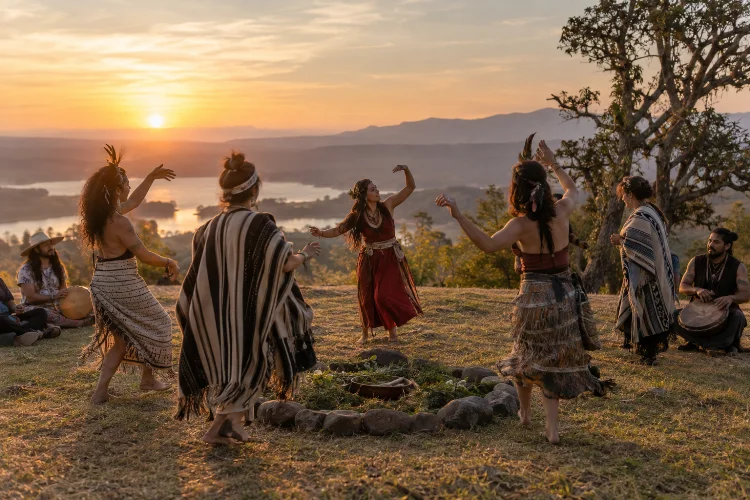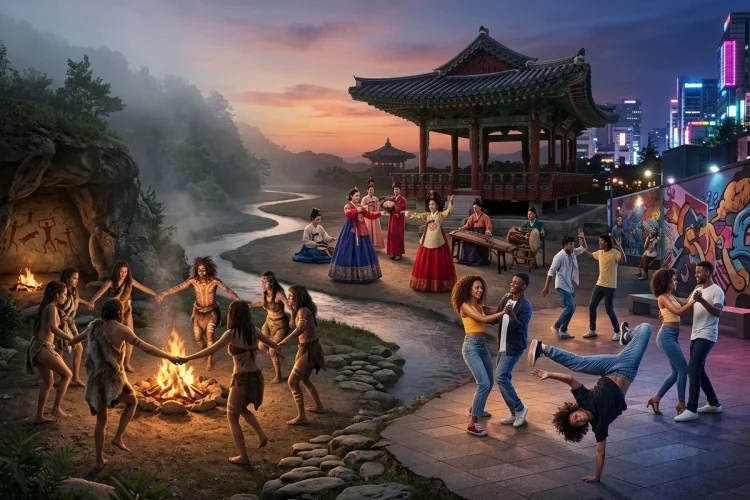
Long before people had theatres, cameras, or written languages, they had movement. Communities danced to celebrate births, prepare for important events, honour spiritual beliefs, mourn losses, and strengthen relationships.
The steps may have differed from place to place, but the need to move together appeared across cultures. Understanding why dance is important in human culture means looking beyond entertainment.
Dance can function as a historical record, a social activity, a religious practice, a form of protest, and a language for emotions that are difficult to explain with words.
It is also constantly evolving. Traditional dances pass knowledge between generations, while newer styles respond to migration, technology, music, and social change.
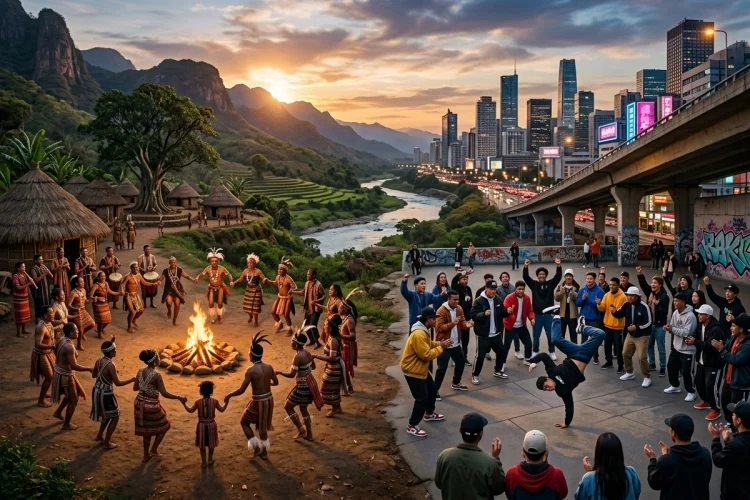
A ceremonial performance in a village and a freestyle battle in a modern city may look completely different, yet both can express identity and create belonging.
Dance matters because it connects the personal body to a much larger human story.
Dance Preserves Cultural Identity
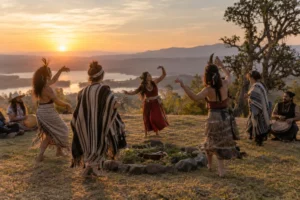
Every culture develops distinctive ways of moving. Posture, rhythm, gestures, formations, costumes, and music can reveal where a dance comes from and what a community values.
Traditional dance may represent local history, religious beliefs, relationships with nature, or shared ideas about family and society. Learning the choreography often means learning the stories and customs surrounding it as well.
UNESCO treats traditional dance as part of intangible cultural heritage. This heritage includes not only movement but also associated music, clothing, masks, props, knowledge, and culturally important performance spaces.
For example, Saman dance belongs to the cultural heritage of the Gayo people of Aceh, Indonesia. Its tightly coordinated movements, songs, and verses are performed during religious and national celebrations and help strengthen relationships between communities.
When a younger generation learns such a dance, it receives more than a sequence of steps. It inherits a physical connection to the people who performed those movements before.
Dance Passes Knowledge Between Generations
Not every historical lesson is stored in a book. In many communities, important knowledge is transmitted through observation, repetition, music, and physical participation.
Children may first watch a dance during weddings, festivals, or ceremonies. Later, they copy simple movements, learn the accompanying songs, and eventually understand the deeper meaning of the performance.
This process creates continuity. Even when costumes, music, or presentation styles change slightly, the dance can remain a recognisable link between older and younger community members.
However, cultural transmission is not automatic. Migration, disappearing performance spaces, reduced community events, and the influence of mass media can weaken opportunities for traditional learning. UNESCO has noted these challenges in its safeguarding work for Saman dance.
Documenting a dance can help, but videos alone are not enough. Living traditions survive most successfully when people continue teaching, performing, discussing, and adapting them within their own communities.
Dance Builds Social Bonds
Dancing together requires people to pay attention to one another. Group members share timing, direction, space, and energy, often making constant adjustments without speaking.
This coordination can create a strong sense of unity. Research involving synchronised group dancing found that both physical exertion and coordinated movement contributed to greater feelings of social bonding among participants.
That effect is easy to recognise at weddings, festivals, school events, and social dance nights. People who may barely know each other can feel connected after sharing a circle dance, line dance, or partner routine.
Tango provides a useful cultural example. The tradition developed in the urban communities of Buenos Aires and Montevideo, and UNESCO describes its music, poetry, and dance as expressions of regional identity that also encourage cultural dialogue.
Dance therefore creates both close relationships and wider communities. A local class, ballroom club, hip-hop crew, or traditional arts group can give people a place where they feel recognised and included.
Dance Communicates Beyond Words
Words are powerful, but they are not always enough. Grief, excitement, anger, attraction, fear, and hope can be difficult to explain directly.
Dance provides another language. A slow, weighted movement might communicate sadness, while fast, open gestures can suggest celebration or freedom. Repetition may represent routine, pressure, memory, or resistance.
Cultural context shapes how these movements are understood. A gesture with sacred meaning in one tradition might be decorative or unfamiliar in another. That is why learning a dance responsibly involves understanding its origins rather than copying only its appearance.
Dance can also communicate stories. Classical Indian dance, ballet, community theatre, and many ceremonial traditions use movement, facial expression, music, and costume to represent characters and events.
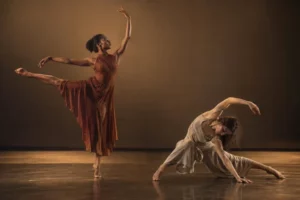
Even abstract choreography communicates something. It may not tell a clear story, but its use of space, timing, tension, and human interaction can still make an audience think or feel.
Dance Marks Important Moments in Life
Human communities often dance when something changes. Weddings, harvests, religious holidays, coming-of-age ceremonies, victories, funerals, and national celebrations may all include organised movement.
These dances help transform an individual experience into a shared event. A marriage, for instance, affects two people directly, but music and dancing allow the entire community to participate in the celebration.
Movement also gives rituals a visible structure. Participants may enter a space in a particular order, repeat symbolic gestures, or move in circles to represent unity and continuity.
In this way, dance helps people process major transitions. It gives joy a public form and allows grief to be carried collectively instead of privately.
The Library of Congress notes that folklorists study dance because it can express ethnic identity and the values of a culture. Such performances show not only how people move, but also how they understand themselves and their relationships.
Dance Supports Physical and Mental Well-Being
Dance is culturally meaningful, but it is also physical activity. Depending on the style and intensity, it can challenge cardiovascular fitness, muscular endurance, coordination, balance, flexibility, and mobility.
The World Health Organization states that regular physical activity can help prevent or manage several noncommunicable diseases while supporting mental health, quality of life, and general well-being. Dance can be an enjoyable way to include more movement in everyday life.
Its benefits are not purely physical. Dancing requires memory, attention, timing, spatial awareness, and quick decision-making. Social forms also ask participants to communicate and respond to other people.
A systematic review comparing dance with other forms of physical activity found preliminary evidence of benefits in areas including motivation, memory, social cognition, and psychological distress.
The results varied across studies, so dance should not be presented as a guaranteed treatment, but the findings support its wider role in well-being.
Perhaps most importantly, dancing can make exercise feel meaningful. People may remain active because they enjoy the music, friendships, creative expression, or cultural connection-not simply because they feel obligated to work out.
Dance Encourages Creativity and Social Change
Dance does not only preserve existing traditions. It also gives people tools to question, reinterpret, and create something new.
Choreographers can address war, inequality, migration, identity, environmental concerns, and personal freedom through movement. Street dancers may turn public spaces into creative stages, while social movements can use collective dancing to communicate visibility and solidarity.
New dance forms often emerge when cultures meet. Migration carries music and movement into different places, where local performers combine them with their own experiences.
This exchange can produce exciting innovation, but it also requires respect. A popular movement may have roots in a marginalised community whose creators are not always credited.
Learning the history behind a dance helps prevent cultural traditions from becoming anonymous online trends. It encourages dancers to recognise originators, respect cultural meaning, and understand the social conditions that shaped a style.
Technology Is Changing How Culture Dances
Today, people can learn choreography from a phone, watch performances from another continent, and share a short routine with a global audience.
This access makes dance education more widely available. Someone without a nearby studio can discover ballet vocabulary, traditional performances, social dance basics, or hip-hop foundations online.
Digital media also allows communities to document dances that might otherwise receive little international attention. Archives and recordings can support education, research, and cultural preservation.
However, short videos can remove movement from its context. Viewers may see a catchy step without learning its name, creator, community, or original purpose.
The most respectful approach is to use technology as a doorway rather than a replacement for deeper learning. After discovering a dance online, explore its music, history, teachers, and cultural background.
Dance is important in human culture because it carries memory, expresses identity, builds relationships, and gives communities a way to experience major moments together.
It can communicate beyond language while supporting creativity, physical activity, and emotional well-being. From Saman and tango to ballet, social dancing, and modern street styles, every tradition reflects the people and circumstances that shaped it.
Dance is never just a collection of attractive steps. The next time you watch or learn a routine, look beyond the choreography.
Find out where it came from, who created it, and what it means to its community. Better yet, attend a local performance or beginner class and experience how movement can turn history and human connection into something you can feel.