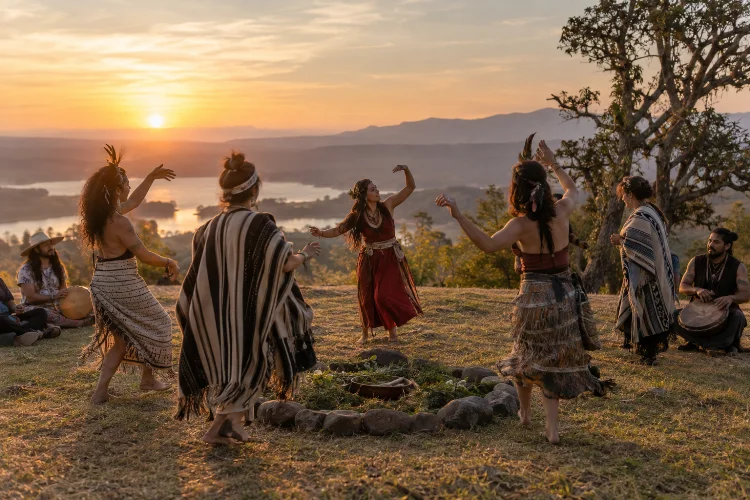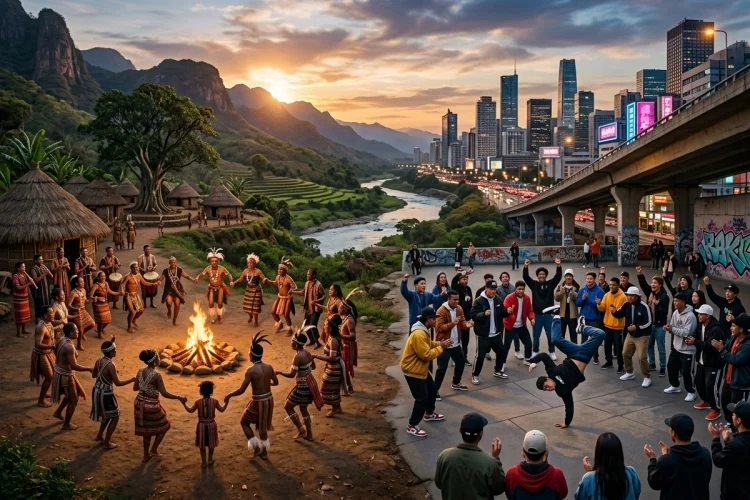
Long before people could stream choreography, attend a ballet, or learn steps from a studio teacher, they were already moving together.
Dance has been used to celebrate, mourn, worship, tell stories, mark life changes, and simply enjoy music and community. A brief history of dance around the world is difficult to fit into one neat timeline.
Movement does not leave behind the same evidence as buildings or written documents, and thousands of traditions developed independently. Some were documented by courts and institutions, while others survived through families, ceremonies, and oral teaching.
What we can see is a constantly changing human practice. Ritual movement became theatrical performance, social dances crossed borders, and local traditions inspired new urban styles.
This guide follows several major turning points in the evolution of dance while recognising that no single culture invented it and no short article can represent every tradition.
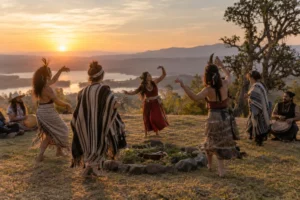
Dance Before Written History
The exact origin of dance is unknown because movement disappears as soon as it is performed. Early communities probably did not separate dance from music, ritual, storytelling, and social life as neatly as modern institutions often do.
Ancient artworks show that organised dancing existed thousands of years ago. A painted limestone fragment from Egypt’s New Kingdom, dated to approximately 1353–1336 BCE, depicts dancers performing with musicians.
It provides valuable physical evidence that movement and music were closely connected in ancient societies. Dance was rarely just entertainment.
UNESCO explains that traditional performing arts may involve musical instruments, masks, costumes, body decorations, props, and culturally important performance spaces. The movement often belongs to a much larger system of community knowledge.
Ancient and Classical Dance Traditions
As societies developed writing, temples, courts, and theatre, some movement practices became more formally described. India offers one of the clearest examples of ancient performance theory continuing to influence living traditions.
The Natya Shastra, commonly dated between approximately 200 BCE and 200 CE, discusses drama, music, gesture, emotion, and movement. Indian classical forms such as Bharatanatyam connect present-day performance with older literary, sculptural, religious, and regional practices.
These traditions combine rhythmic movement with storytelling. Hand gestures, facial expressions, footwork, posture, and musical structures allow dancers to communicate characters and ideas without ordinary speech.
Ancient dance history was never one straight road leading toward Western theatre. Different cultures developed movement for sacred stories, community celebrations, courtly display, martial training, healing practices, and seasonal rituals.
Dance as Community Memory
For much of history, dance was learned by watching and joining rather than reading instructions. Children observed elders, communities repeated dances during festivals, and experienced performers carried knowledge in their bodies.
This is why traditional dance is often described as living cultural heritage. It can preserve social roles, local history, spiritual beliefs, musical traditions, clothing, and relationships with a particular place. The choreography may gradually change while remaining meaningful to the people who practise it.
Trade, migration, conquest, and displacement also transformed the evolution of dance. Rhythms, instruments, steps, and performance customs travelled with people, sometimes through peaceful exchange and sometimes through violence.
Many familiar dance genres are therefore cultural mixtures rather than isolated inventions. Understanding these connections helps us appreciate why it is difficult to place a single dance style inside one simple national category.
A useful way to watch a traditional performance is to ask more than, “What are the steps?” Consider who performs it, when it appears, what music accompanies it, and what the community wants the movement to communicate.
European Courts and the Rise of Ballet
In Renaissance and Baroque Europe, dance became an important part of court entertainment and political display. Elaborate performances combined movement, music, poetry, costumes, and scenery to demonstrate wealth, discipline, and social status.
France played a major role in formalising ballet. In 1661, King Louis XIV established the Royal Academy of Dance and appointed Pierre Beauchamp as its director.
This institutional support helped standardise training and contributed to the French terminology still used in ballet classes today.
Ballet gradually moved beyond court celebrations and developed into a professional theatrical art form. Technique became more demanding, public stages grew in importance, and choreography developed as a method of both storytelling and abstract expression.
The classical dance form later expanded through France, Italy, Denmark, Russia, Britain, the United States, and many other regions. Each school and training tradition shaped ballet differently, showing that even a highly structured genre can continue evolving as it travels.
Social Dance, Ballrooms, and Cultural Exchange
Not all dance history happened on a theatre stage. Social dancing developed wherever people gathered in homes, public halls, clubs, festivals, weddings, and community events.
Dance manuals from the late fifteenth to early twentieth centuries recorded changing steps, etiquette, formations, and partner dances. By the nineteenth century, Western ballroom culture included the waltz, polka, quadrille, and numerous regional variations.
Tango offers a particularly clear example of cultural exchange. It developed in the urban environment of Buenos Aires and Montevideo through a mixture of social and musical influences.
UNESCO describes tango’s music, dance, and poetry as expressions of a shared regional identity that also encourage diversity and cultural dialogue. The style eventually travelled far beyond Argentina and Uruguay, becoming one of the world’s most recognisable partner dances.
Social dancing also challenged ideas about class, gender, personal space, and acceptable public behaviour. A style that appeared shocking to one generation could become a familiar ballroom or wedding dance for the next.
The Twentieth Century Changed the Pace
Industrial cities, recorded music, radio, cinema, and popular theatre accelerated the spread of dance. People could encounter styles beyond their immediate communities and imitate performers they saw in ballrooms, theatres, or films.
After World War I, dances such as the Charleston, foxtrot, and Lindy Hop became major parts of popular social culture. Library of Congress collections suggest that formal instruction manuals became less central as new dances spread through ballrooms and mass entertainment.
Black creativity strongly influenced global popular movement through jazz-era social dance, rhythm-driven performance, and later street styles. These traditions expanded ideas about improvisation, musicality, individuality, and personal interpretation.
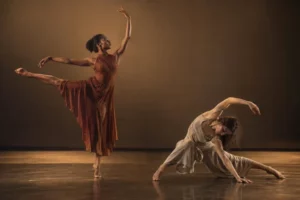
Stage choreographers were also moving beyond classical conventions. Dance could be grounded, abstract, political, theatrical, or constructed from everyday gestures. The division between concert dance, social movement, and popular entertainment became increasingly flexible.
Hip-Hop and Dance in the Global Media Age
Hip-hop culture emerged in the South Bronx during the 1970s, creating new forms of expression within African American and Latino communities. Breaking developed alongside DJing, emceeing, and graffiti, with dancers responding creatively to instrumental breaks.
Pioneering DJs extended these musical sections so dancers could demonstrate individual combinations, footwork, freezes, and personal style. Dance battles became opportunities for competition, reputation, innovation, and community participation.
Hip-hop culture eventually spread beyond New York through films, tours, television, competitions, recordings, and local scenes. Communities around the world learned its foundations while developing their own approaches.
Today, social media can turn a short routine into a worldwide trend within days. This creates exciting opportunities for cultural exchange, but it can also separate a movement from its original history.
A viral step may come from a specific club, community, or creator who deserves recognition. Understanding dance history is therefore practical rather than merely academic. It helps dancers credit artists, approach traditions respectfully, and recognise that every style carries a story.
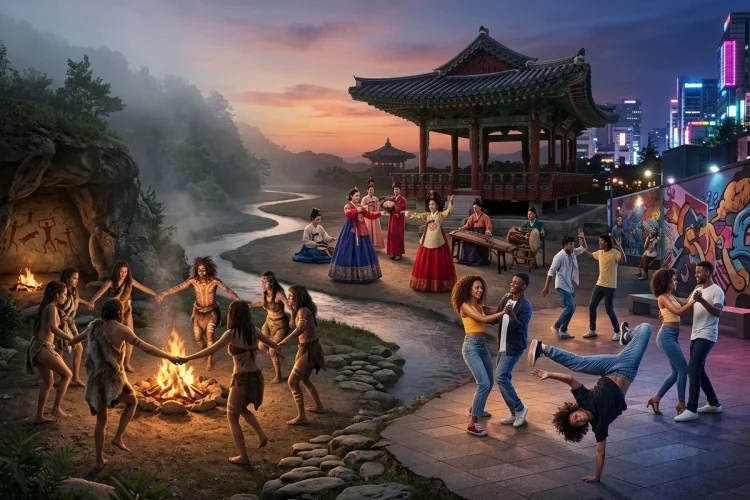
The history of dance is the history of people moving, meeting, remembering, and changing. Ancient ceremonial movement, Indian classical traditions, European ballet, ballroom culture, tango, jazz-era social dance, and hip-hop reveal different relationships between the body and society.
No timeline can capture every community, but one lesson remains clear: dance never develops in isolation. It travels through teaching, migration, celebration, technology, and cultural exchange.
The next time you watch or learn a routine, look beyond the visible steps. Explore where the style began, listen closely to its music, and learn about the people who shaped it. Knowing the history can make every movement feel richer and more meaningful.