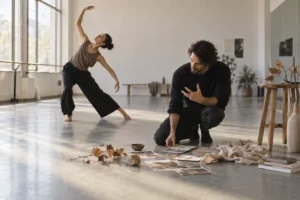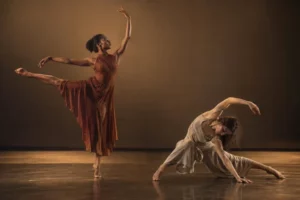
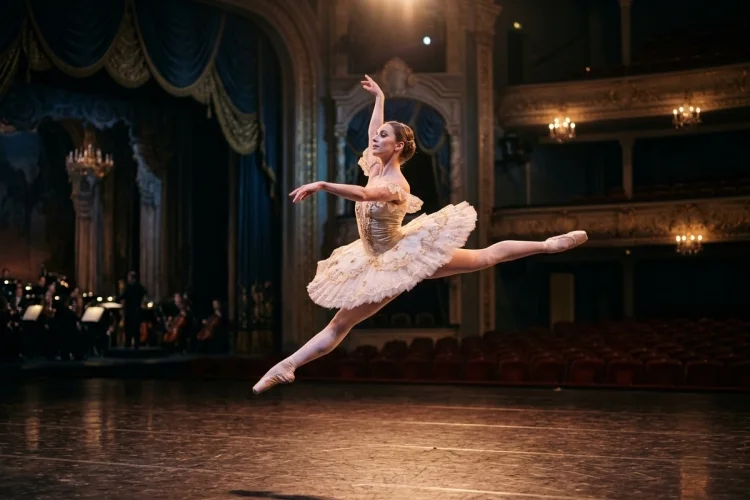
Picture a dancer floating across a stage, landing from a jump without a sound, and telling a story without speaking.
allet can look effortless from the audience, yet that smooth performance is built through precise technique, musical awareness, strength, and patient practice.
So, what is ballet? Ballet is a theatrical dance form with a structured movement vocabulary. It combines organised steps, expressive gestures, music, costumes, scenery, and choreography.
Some productions tell dramatic stories, while others focus on shape, rhythm, and the relationship between movement and music. For beginners, ballet may seem formal or intimidating.
The French terminology, controlled posture, and famous pointe shoes can make it appear suitable only for flexible children or professional performers. In reality, recreational students can begin at many ages.
You do not need a “ballet body” or natural grace-only a suitable class, realistic expectations, and a willingness to practise the basics.
What Is Ballet, Exactly?
Ballet is both a dance technique and a performing art. Its technique includes established positions, steps, jumps, turns, and gestures. Its artistic side uses that vocabulary to express emotion, interpret music, create visual patterns, or tell a story.
One recognisable feature is turnout, where the legs rotate outward from the hip joints. Turnout supports ballet’s directional movement, but it should come from a dancer’s natural hip range rather than being forced through the knees or feet.
The Kennedy Center describes it as a defining ballet feature that enables a wider range of movement.
Ballet also values alignment, coordination, balance, control, and elongated lines. These principles provide dancers with a shared movement language rather than forcing every performer to look identical.
A Short History of Ballet
Ballet developed from European court entertainment and became especially influential in seventeenth-century France. In 1661, King Louis XIV created the Royal Academy of Dance, helping to formalise dance education and establish professional standards.
As ballet moved from royal courts to public stages, trained performers introduced more demanding footwork, jumps, and turns. The French vocabulary created during its development is still used internationally today.
The nineteenth century brought Romantic works such as Giselle, with emotional stories and supernatural themes. Imperial Russia later became a major centre of classical ballet, producing enduring works such as The Sleeping Beauty, The Nutcracker, and Swan Lake.
Modern choreographers continue to adapt the art form by experimenting with music, movement quality, costume, staging, and storytelling.
The Basic Language of Ballet
Many ballet terms are French, but beginners meet the same foundations repeatedly. A plié is a bending of the knees, while a tendu stretches the foot along the floor until the leg and foot are fully extended.
A relevé lifts the heels so the dancer balances on the balls of the feet. An arabesque is a position supported on one leg with the other extended behind the body. American Ballet Theatre’s online dictionary explains and demonstrates this international vocabulary.
Students also learn five basic positions of the feet and coordinated arm positions. Details may vary slightly between teaching methods, but the purpose remains similar: creating a reliable foundation for more complex movement.
These basic exercises are not merely warm-ups. Pliés prepare dancers to jump and land, tendus develop foot articulation and leg alignment, and relevés build calf strength and balance.
What Happens in a Ballet Class?
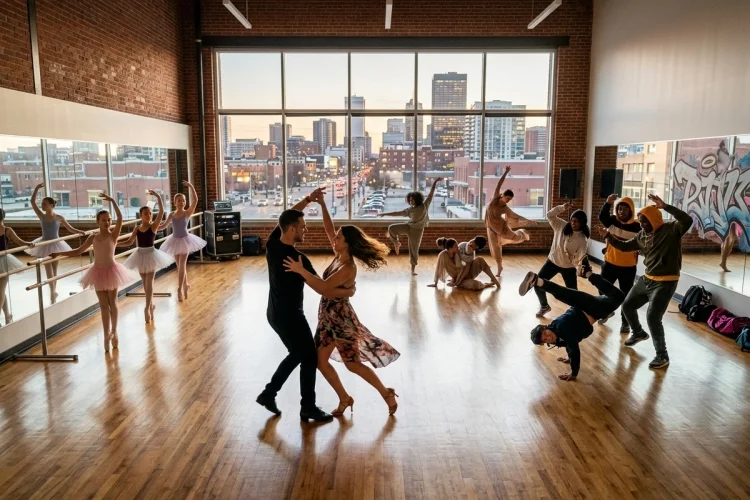
A typical ballet class begins at the barre, a fixed handrail that provides light support while dancers warm up and practise technique. Exercises may include pliés, tendus, leg circles, extensions, and controlled rises.
The teacher usually repeats combinations on both sides to train the body evenly. The barre should support placement and balance rather than carry the dancer’s full weight.
Students then move into the centre of the studio, where they practise arm coordination, balance, turns, and travelling steps without support. Later exercises may include small jumps, larger jumps, and combinations moving across the floor.
Beginners are not expected to remember everything immediately. Ballet develops through repetition. The same movement families return in gradually more difficult combinations, allowing strength, memory, coordination, and musicality to grow together.
Major Types of Ballet
Not every ballet looks like Swan Lake. Classical ballet is often associated with formal technique, symmetry, traditional costumes, partner work, and large-scale productions. It may feature principal dancers, soloists, and a corps de ballet performing as an ensemble.
Romantic ballet emphasises emotion, fantasy, and supernatural characters. Neoclassical ballet keeps much of the classical vocabulary but often removes elaborate scenery and traditional storytelling. It may appear faster, cleaner, and more abstract.
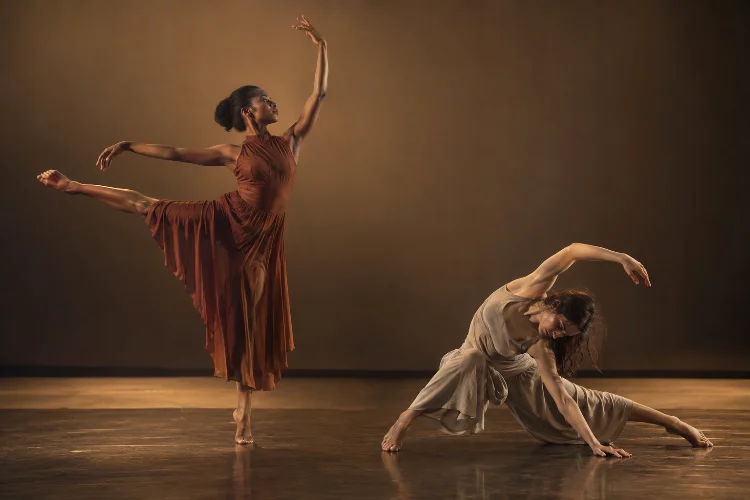
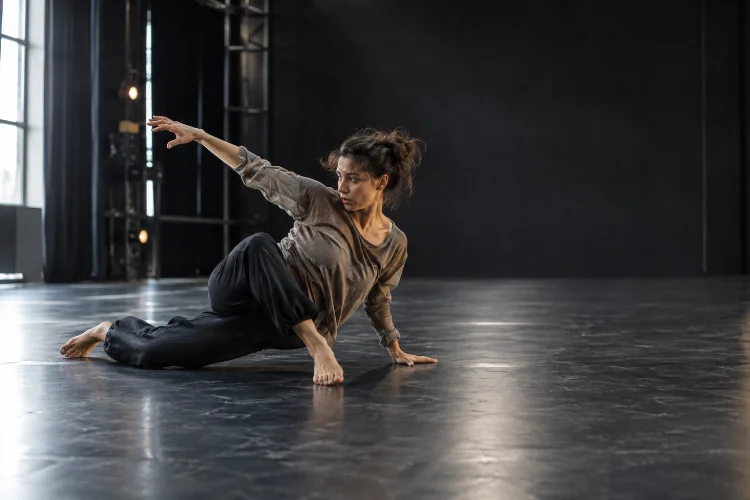
Contemporary ballet combines classical technique with influences from modern and contemporary dance. Performers may dance barefoot, use the floor, move deliberately off balance, or work with unconventional music.
These variations show that ballet is not frozen in the past. Its technical language can support both traditional fairy-tale productions and new choreography about modern experiences.
Pointe Work Is Not for Complete Beginners
Pointe work-dancing on the tips of specialised shoes-is one of ballet’s best-known images. However, it is an advanced skill rather than the starting point of ballet training.
Pointe shoes do not hold dancers upright by themselves. Students need sufficient core control, leg alignment, foot and ankle strength, flexibility, technical experience, and consistent training.
The International Association for Dance Medicine & Science recommends assessing individual physical and technical readiness instead of using age alone.
Beginners should never buy pointe shoes and attempt pointe exercises without qualified supervision. Adult recreational dancers may or may not progress to pointe depending on their bodies, goals, and training schedules.
Ballet in soft shoes remains challenging, expressive, and completely valid. Pointe work is only one part of the wider art form.
How to Start Ballet as a Beginner
Look for a class clearly labelled for complete beginners or adult beginners. A good teacher should explain terminology, offer corrections respectfully, and encourage students to work within their current physical range.
Wear fitted but flexible clothing that allows the teacher to see your alignment. A T-shirt with leggings or close-fitting sportswear is often acceptable, although individual studios may have specific dress codes.
Proper ballet slippers are helpful because they allow the feet to move freely and help dancers feel the floor. Ask which type of shoe is required before buying anything.
Arrive early and mention any injuries or movement limitations. During class, focus on one or two corrections at a time rather than trying to perfect your arms, feet, posture, turnout, and timing simultaneously.
Most importantly, never force turnout, flexibility, or high leg positions. A small movement performed with good control is more valuable than a dramatic shape created through strain.
Why Learn Ballet?
Ballet can develop coordination, balance, posture awareness, musicality, memory, and concentration. It also teaches patience because progress usually comes through many small adjustments rather than dramatic overnight changes.
The technique can support other dance styles by strengthening fundamental movement skills. Actors, figure skaters, gymnasts, and musical-theatre performers may also study ballet because of its focus on alignment, precision, and body control.
There is an artistic benefit too. Ballet encourages dancers to consider not only what a movement is, but also how it feels and what it communicates.
Even a basic port de bras, or movement of the arms, can express calmness, confidence, sadness, or joy depending on its timing and quality.
Your first achievement may simply be remembering a combination or completing a controlled relevé-and that still counts as meaningful progress.
Ballet is a structured dance technique, a theatrical tradition, and a constantly evolving art form.
Its French terminology, precise positions, musical phrasing, and controlled movement may seem complicated, but every dancer begins with simple foundations such as pliés, tendus, and weight transfers.
You do not need professional ambitions, childhood training, or pointe shoes to experience it. A supportive beginner class can help you build coordination, strength, confidence, and a deeper appreciation of movement.
Start by watching a complete production, learning a few common terms, or booking an introductory lesson at a reputable studio. Give yourself permission to feel awkward at first-the elegance develops one carefully practised step at a time.