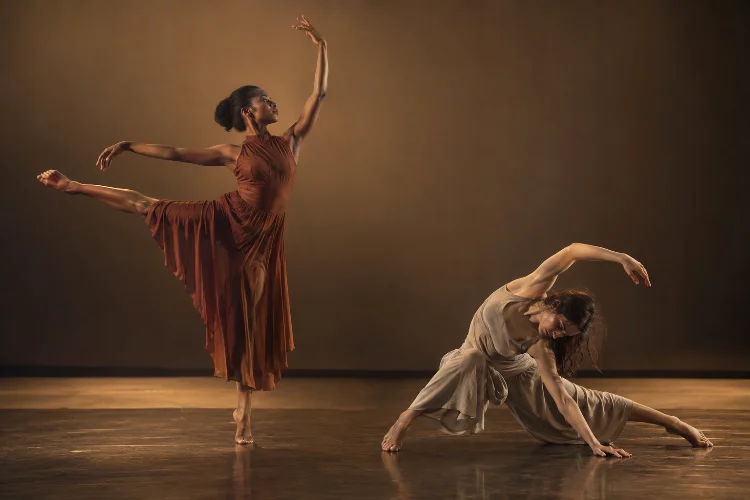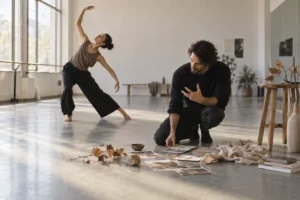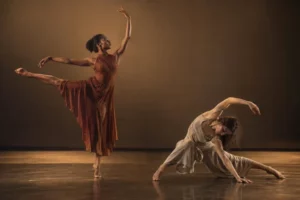
Watch a contemporary dance performance for the first time and you might notice something unusual.
One moment, a dancer is standing tall and controlled; the next, they are rolling across the floor, twisting their torso, falling, recovering, or moving in ways that seem almost completely spontaneous.
That freedom is part of what makes contemporary dance so interesting. So, what is contemporary dance? In simple terms, it is a broad style of dance that combines technical training with creative exploration.
It draws inspiration from ballet, modern dance, jazz, improvisation, and many other movement traditions while giving dancers room to develop their own physical language.
Unlike dance forms built around a fixed vocabulary of steps, contemporary dance can change significantly from one choreographer to another. A performance might be emotional and theatrical, abstract and experimental, or even performed partly in silence.
This flexibility has helped contemporary dance become an important part of today’s professional dance world.
What Is Contemporary Dance?
Contemporary dance is a form of performance dance that emphasizes freedom, creativity, body awareness, and experimentation. Rather than following one strict set of movements, dancers often combine established techniques with their own natural ways of moving.
The word “contemporary” essentially refers to something connected with the present time. That idea fits this dance form well because contemporary choreography continually changes as dancers respond to new artistic ideas, cultures, music, technology, and social experiences.
A dancer might use controlled ballet-inspired lines in one sequence before shifting into grounded movements, floor work, or improvisation in the next.
Because of this variety, there is no single movement that automatically defines contemporary dance. It is better understood as an approach to exploring movement rather than a fixed collection of steps.
Where Did Contemporary Dance Come From?
The roots of contemporary dance are closely connected to the development of modern dance during the late nineteenth and early twentieth centuries.
Early modern dancers wanted alternatives to the highly structured conventions of classical ballet. Artists such as Isadora Duncan, Ruth St. Denis, Doris Humphrey, and Martha Graham explored more natural, expressive, and grounded movement.
Martha Graham became particularly influential. Her movement system focused heavily on breathing, contraction, release, gravity, and emotional expression.
The Library of Congress describes Graham as one of the central figures in establishing American modern dance during the twentieth century.
Later artists continued challenging existing ideas about what dance should look like. Merce Cunningham, for example, experimented with the relationship between movement, music, space, and chance.
By the middle of the twentieth century, influences from modern dance, ballet, postmodern experimentation, jazz, and other traditions increasingly overlapped. That mixture helped shape what audiences now broadly recognize as contemporary dance.
Key Characteristics of Contemporary Dance
One reason contemporary dance can be difficult to define is that it does not have one universal visual style. Still, several characteristics appear frequently.
1. Freedom of Movement
Contemporary choreography often gives dancers more freedom to investigate how their bodies naturally move.
Instead of constantly maintaining an upright posture, performers may curve their spines, shift their weight, collapse toward the floor, rotate, slide, or deliberately move off balance.
The result can make the movment feel less predictable and more human.
2. Use of Gravity and Body Weight
Gravity is not something contemporary dancers always try to hide.
A dancer may intentionally fall toward the floor, transfer weight between different parts of the body, or use momentum to create the next movement.
Learning how to fall and recover safely is therefore an important skill in many contemporary techniques.
3. Connection Between Breath and Movement
Breathing can influence the timing and quality of movement.
For example, inhaling may accompany an expanding movement through the chest, while exhaling might support curling or contracting the torso.
This relationship can make choreography appear fluid rather than mechanical.
Common Contemporary Dance Techniques
Although contemporary dance encourages experimentation, that does not mean dancers simply move randomly. Professional performers usually develop significant technical control.
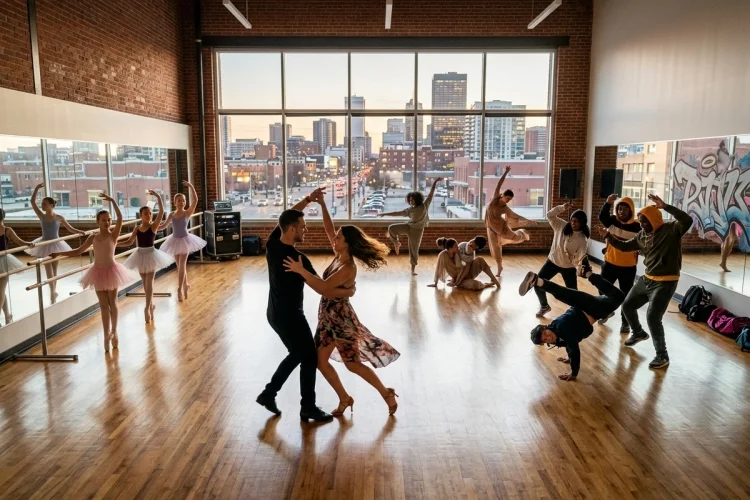
Contemporary classes often combine several movement systems rather than teaching one universal method.
1. Floor Work
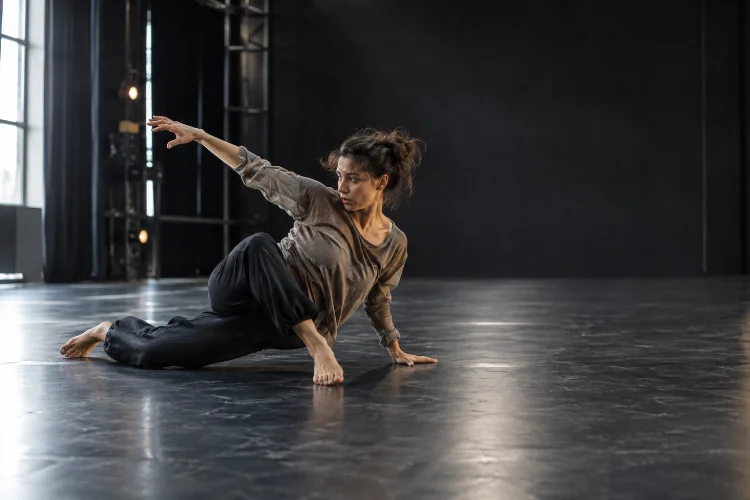
Floor work involves using the ground as an active part of choreography.
Dancers may roll, slide, spiral, crawl, kneel, or move from standing positions to the floor and back again. Good floor technique requires coordination, control, and an understanding of how to distribute body weight safely.
Rambert identifies floor work as one of the commonly recognized features of contemporary dance.
2. Release Technique
Release-based movement encourages dancers to reduce unnecessary muscular tension while working with breath, momentum, alignment, and gravity.
The goal is not to become physically loose or uncontrolled. Instead, dancers learn to use energy more efficiently.
The Place, a major contemporary dance organization in London, includes release technique alongside Cunningham-based movement in its beginner contemporary training.
3. Improvisation
Improvisation allows dancers to make movement decisions in real time.
A choreographer might provide a simple instruction such as “move as if the floor is becoming unstable” and allow dancers to explore different responses.
This type of improvsiation can also help choreographers discover material that later becomes part of a structured performance.
Contemporary Dance vs. Modern Dance
Modern dance and contemporary dance are closely related, so people often use the terms interchangeably.
Historically, however, modern dance developed earlier. It emerged largely as an alternative to classical ballet and eventually produced distinct systems associated with choreographers such as Martha Graham, Doris Humphrey, José Limón, and others.
Contemporary dance grew from those foundations but became increasingly open to mixing techniques.
A contemporary dancer might study Graham technique, Cunningham technique, ballet, contact improvisation, martial arts, street dance, or movement influenced by theater.
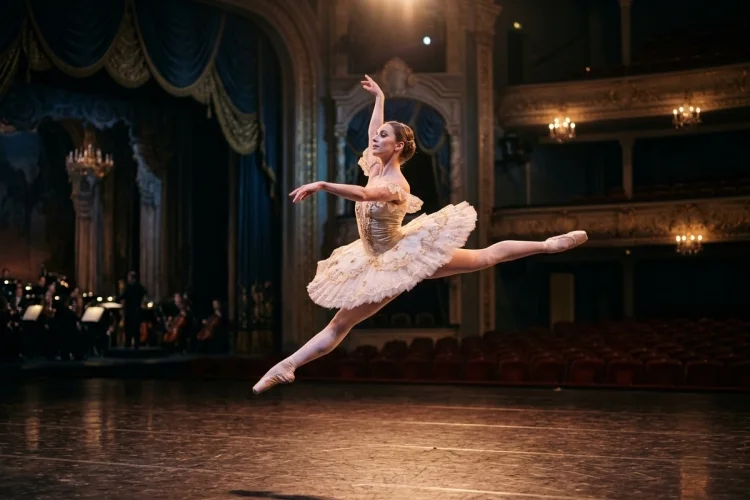
Classical ballet generally has a more standardized vocabulary. Contemporary dance is usually less concerned with preserving one traditional form and more interested in discovering new possibilities.
The boundaries remain flexible, though. A contemporary choreographer may use extensive ballet technique, while a ballet company may commission highly experimental contemporary works.
What Can Contemporary Dance Express?
Contemporary dance is sometimes associated with emotional storytelling, but it does not always tell a traditional story.
A performance might explore grief, identity, relationships, isolation, politics, memory, technology, or cultural change. Another piece might simply investigate movement itself without asking the audience to follow a specific narrative.
For example, imagine three dancers repeatedly walking toward one another but changing direction just before meeting.
One audience member might interpret the scene as loneliness. Someone else might see conflict, missed opportunities, or simply an interesting spatial pattern.
That openness is intentional in many contemporary works. Audiences are often invited to develop their own interpretation rather than being given one correct meaning.
Benefits of Learning Contemporary Dance
Contemporary dance can improve much more than performance ability.
Regular training can develop coordination, balance, flexibility, spatial awareness, musicality, and overall body control. Because dancers frequently move between standing and floor positions, classes can also challenge strength and mobility in unusual ways.
The creative side matters just as much.
Improvisational exercises encourage dancers to make quick decisions and become more comfortable experimenting. Over time, this can increase confidence and make movement feel more personal rather than simply copied from an instructor.
It can also be accessible to adults who are discovering dance later in life. Beginner classes often introduce basic movement gradually instead of expecting students to arrive with years of ballet training.
The first experiance may feel unfamiliar, but that is completely normal.
How to Start Learning Contemporary Dance
If you are a beginer, look for an introductory contemporary class rather than an advanced choreography workshop.
A beginner session may include a warm-up, basic spine movements, weight transfers, floor exercises, simple traveling combinations, jumps, and short improvisation tasks. Classes may use recorded music, live musicians, or occasionally silence.
The Place’s introductory programs, for instance, describe beginner training involving curves, twists, arches, breath-based release work, floor movement, jumps, and creative exploration.
Wear clothing that allows you to move comfortably. Contemporary dancers often work barefoot, although requirements vary between studios.
Most importantly, do not spend your first class worrying about whether every movement looks perfect.
Technique matters, but curiosity matters too. Staying consistant with practice will gradually improve both physical control and confidence.
So, what is contemporary dance? It is a constantly evolving approach to dance that combines technique, creativity, physical exploration, and personal expression.
Its roots are connected to modern dance and the artists who challenged traditional ballet conventions, but contemporary choreography has expanded far beyond any single movement system.
Floor work, improvisation, breath, gravity, changing rhythms, and creative experimentation can all play important roles.
That flexibility is exactly what makes the form exciting. Two contemporary performances can look completely different while still belonging to the same broad artistic world.
If the style sounds interesting, watching performances is a great start-but experiencing it physically is even better. Find a beginner contemporary dance class, give yourself permission to experiment, and discover how many different ways your body can communicate through movement.