When people hear the phrase “dance education,” they often picture students standing in front of a mirror and copying steps from an instructor. Technique is certainly part of the experience, but meaningful dance learning goes much further.
So, what is dance education? It is the structured study of movement as a physical skill, creative art, cultural practice, and form of communication.
Students may learn dance vocabulary, create choreography, analyse performances, explore traditions, and reflect on how movement connects with society and personal experience.
A good programme is not only designed to produce professional dancers. It can help people of different ages and abilities understand their bodies, express ideas, cooperate with others, and appreciate cultural diversity.
Dance also brings together areas that schools often teach separately. It combines physical activity with music, history, creativity, observation, problem-solving, and emotional expression. That combination explains why dance education matters both inside and beyond the studio.
What Does Dance Education Include?
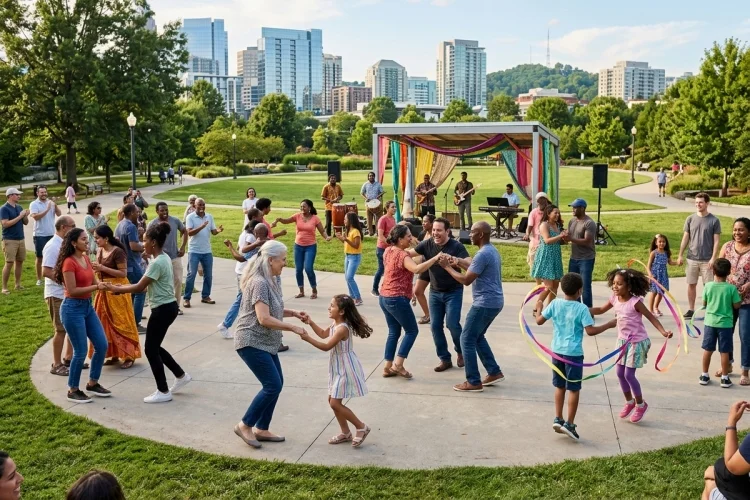
Dance education covers learning about, through, and within dance. It may take place in schools, universities, private studios, community centres, cultural organisations, or informal community settings.
Technique classes teach physical skills such as alignment, balance, rhythm, coordination, strength, and movement vocabulary. Creative sessions may ask students to improvise, develop movement phrases, or arrange choreography.
Students can also study dance history, performance analysis, anatomy, cultural traditions, music, production, and dance science. Advanced programmes may include teaching methods, research, choreography, notation, and arts management.
The National Core Arts Standards organises dance learning around four artistic processes: creating, performing, responding, and connecting.
This approach recognises that students should do more than reproduce steps; they should also make artistic choices, interpret work, and relate movement to wider experiences.
It Develops Physical Literacy and Movement Skills
Dance education helps students understand how their bodies move through space. They practise skills such as balance, coordination, weight transfer, timing, posture, mobility, and controlled changes of direction.
This kind of body awareness is sometimes described as physical literacy. It gives people greater confidence and competence when participating in physical activities, rather than focusing only on competition or athletic performance.
Dance programmes can be particularly useful for developing fundamental movement skills in younger children.
A 2025 systematic review and meta-analysis examined dance programmes as a method of improving skills such as locomotion, balance, and object-free body control among preschool children.
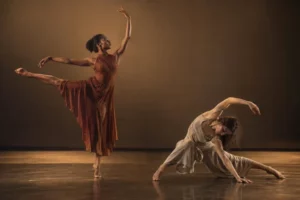
The exact physical demands depend on the genre and lesson format. Ballet may emphasise alignment and control, while hip-hop can develop grooves, rhythmic coordination, and quick weight shifts.
Creative dance may focus more strongly on spatial exploration and movement problem-solving.
Dance should not replace every other form of physical activity. However, it can provide an engaging option for students who do not connect with conventional team sports.
It Teaches Creativity, Not Just Choreography
In a strong dance class, students are not always given the “correct” movement. They may receive a question, theme, object, image, or piece of music and be asked to develop their own response.
For example, a teacher might ask students to create a short phrase showing the transition from tension to calm. They must then decide how to use speed, energy, direction, level, and body shape.
This process turns creativity into a practical skill. Students generate ideas, test them physically, evaluate the result, and revise their choices.
UNESCO’s Framework for Culture and Arts Education describes arts learning as education about, with, and through culture and the arts. It presents creative learning as a way to enrich education, develop skills, and connect knowledge with diverse cultural expression.
Creativity in dance is not limited to people who want careers in the arts. The ability to experiment, adapt, solve problems, and communicate an original idea can be valuable in almost any field.
Dance Education Builds Confidence and Communication
Performing movement in front of other people can feel vulnerable. Students may worry about forgetting steps, looking awkward, or being compared with more experienced dancers.
A supportive learning environment helps them treat mistakes as information rather than failure. Over time, completing a routine, contributing an idea, or performing for an audience can strengthen confidence.
Dance is also a form of nonverbal communication. Students learn how posture, timing, facial expression, gesture, and energy can influence the meaning of a movement.
Group choreography adds another challenge. Dancers must listen, negotiate, share space, solve disagreements, and adjust their timing to work as an ensemble.
Research on dance interventions suggests that learning sequences, creating movement, and participating in partner or group activities may support social interaction and aspects of psychological well-being.
The evidence varies by population and programme, so dance should not be presented as a guaranteed solution for every learner.
It Connects Students with Culture and History
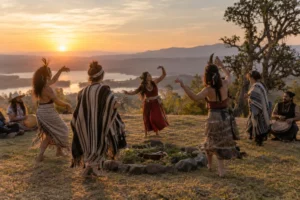
Every dance form comes from somewhere. It reflects particular communities, music, social conditions, values, celebrations, and historical experiences.
Learning flamenco, Saman, ballet, tango, Bharatanatyam, breaking, or another tradition should therefore involve more than copying visible movements. Students also need opportunities to explore who developed the form, why it is practised, and how it has changed.
This cultural context encourages respect. It helps learners understand the difference between appreciating a tradition and removing its movements from their history.
UNESCO’s guidance on culture and arts education highlights creativity, critical thinking, cultural diversity, belonging, and mutual understanding as important parts of learning.
Dance education can also help students examine migration and cultural exchange. Many popular styles were shaped by communities meeting, mixing influences, or responding creatively to inequality and displacement.
It Can Support Health and Well-Being
Dance combines physical effort with music, memory, social interaction, and artistic expression. Depending on its duration and intensity, a class may contribute to cardiovascular activity, muscular strength, balance, flexibility, and coordination.
The World Health Organization includes dancing among forms of physical activity and recommends that children and adolescents accumulate regular movement as part of daily life.
A systematic review of research involving children and adolescents found evidence that dance participation may provide physiological and psychological benefits. However, outcomes differed according to factors such as age, programme length, dance style, and study design.
Enjoyment is an important practical advantage. A student may participate more consistently when movement is connected to favourite music, friends, cultural identity, or creative expression.
Responsible dance education must also teach recovery, warm-ups, anatomical awareness, and respect for individual physical limits. Training should support health rather than treating pain, exhaustion, or extreme flexibility as signs of commitment.
Good Dance Education Should Be Inclusive
Dance programmes have not always welcomed every kind of body. Some environments have promoted narrow expectations concerning age, size, gender, flexibility, disability, or previous training.
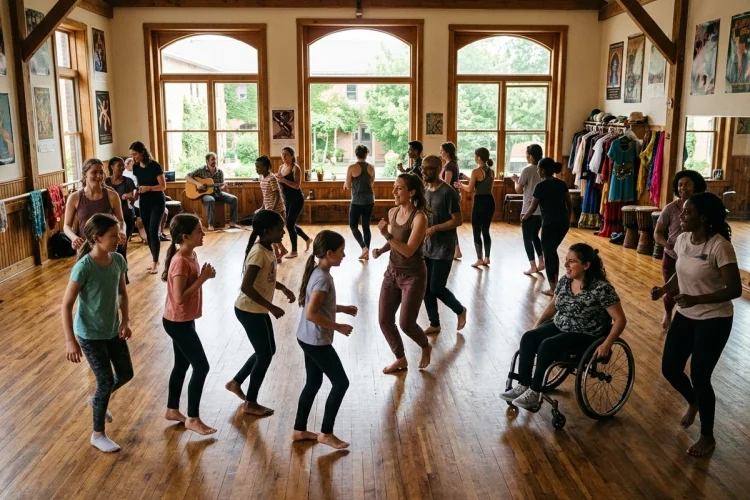
Inclusive dance education recognises that students arrive with different bodies, cultures, learning needs, resources, and goals. Teachers can modify movements, offer multiple ways to participate, and assess progress without expecting everyone to look identical.
Inclusivity does not mean removing technical standards. It means teaching those skills in ways that respect anatomy, experience level, access needs, and the cultural background of the movement.
Opportunity-to-learn standards for dance emphasise access to programmes in which students can create, perform, respond, and connect dance with meaning in education and life.
A recreational beginner deserves thoughtful instruction just as much as an aspiring professional. The purpose of education is to help each learner progress from their own starting point.
What a Quality Dance Programme Looks Like
A useful programme should have clear learning goals rather than simply filling time with routines. Students should understand what they are practising and why it matters.
Teachers should provide age-appropriate instruction, explain safe technique, and create an atmosphere where questions are welcome. Corrections should help learners improve without humiliating them or encouraging painful movement.
Quality programmes also balance imitation with exploration. Students need opportunities to learn established vocabulary, but they should also create, observe, discuss, and reflect.
Progress can be assessed in several ways. A teacher might evaluate control, musicality, collaboration, artistic choices, written reflection, or improvement over time-not only flexibility and performance tricks.
Parents and adult beginners can ask practical questions before joining a class: What are the teacher’s qualifications? Is the level clearly defined? Does the programme teach cultural context? Are adaptations available? How does the instructor approach injury and student well-being?
Dance education is the structured exploration of movement as technique, creativity, communication, culture, and physical activity.
It can help students develop coordination, artistic thinking, confidence, collaboration, and a deeper understanding of both their bodies and the communities around them.
Its value is not limited to preparing professional performers. Quality dance learning can support lifelong participation in the arts while giving people tools to observe, create, question, and express ideas.
Explore a local beginner class, community programme, or school workshop and pay attention to more than the steps.
Look for an environment that encourages safe technique, cultural curiosity, creative choice, and respectful feedback. The best dance education does not merely teach people how to move-it helps them understand why movement matters.