Dance may look like a simple combination of music and movement, but a lot is happening beneath the surface.
A child learning a short routine is also practising balance, memory, timing, confidence, and awareness of other people. An adult joining a social dance class may be exercising while building friendships and discovering a new way to express ideas.
This is why dance supports physical, social, and creative development in such a unique way. It brings together skills that are often taught separately. The body works, the brain makes decisions, emotions become visible, and people learn to cooperate in the same activity.
These benefits are not limited to professional training. Creative movement sessions, community workshops, school programmes, cultural dances, and recreational classes can all support development when they are inclusive, appropriately challenging, and taught safely.
Dance does not produce identical results for everyone, but it offers a flexible environment where people can grow through movement, exploration, and shared experience.
Dance Builds Physical Fitness Through Enjoyable Movement
Dance is a form of physical activity that may challenge cardiovascular endurance, muscular strength, mobility, balance, and coordination. The exact demands depend on the style, pace, class structure, and experience of the dancer.
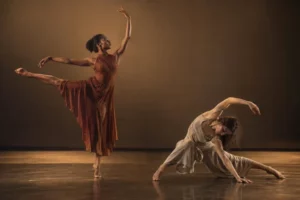
An energetic hip-hop routine may involve repeated jumps and quick direction changes. Ballet develops controlled rises, posture, leg strength, and precise weight transfers, while contemporary dance may include floor work and large movements through space.
The World Health Organization states that regular physical activity provides important physical and mental health benefits.
Dance can contribute to an active lifestyle because it encourages people to move while focusing on music, choreography, and expression rather than exercise alone.
A systematic review examining dance among children and adolescents found evidence of physiological and psychological benefits, although results varied between programmes and participant groups.
This is an important reminder that consistent, well-designed teaching matters more than simply labelling an activity as dance.
It Develops Balance, Coordination, and Body Awareness
Dancers must constantly understand where their bodies are in relation to the floor, the music, and other performers. They shift weight, change direction, control momentum, and adjust their posture within seconds.
These actions develop body awareness and coordination. A simple step-touch requires the dancer to follow a beat, move laterally, transfer weight, and prepare for the next step without losing balance.
Young children can benefit from this type of movement practice because fundamental motor skills create a foundation for later physical activity.
A 2025 systematic review and meta-analysis examined dance programmes as a strategy for improving motor skills in preschool children, including balance and locomotor abilities.
Dance also teaches control rather than movement alone. Students learn how to stop after travelling, land softly after jumping, and maintain alignment while turning. These skills can support greater confidence in everyday movement and other physical activities.
Moving Together Strengthens Social Connection
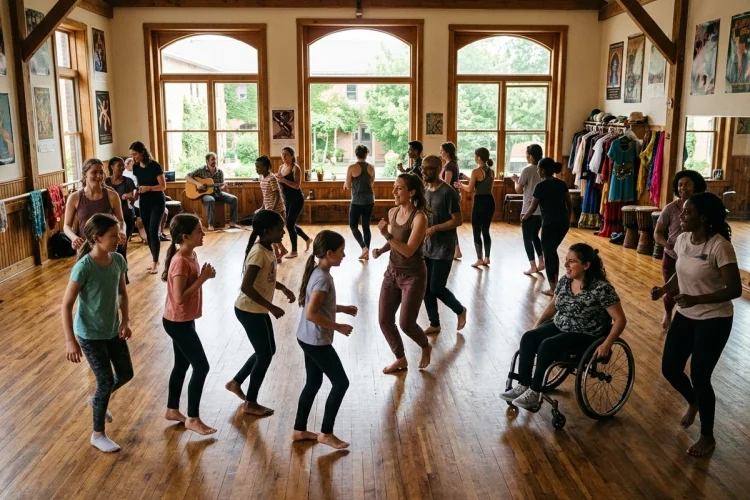
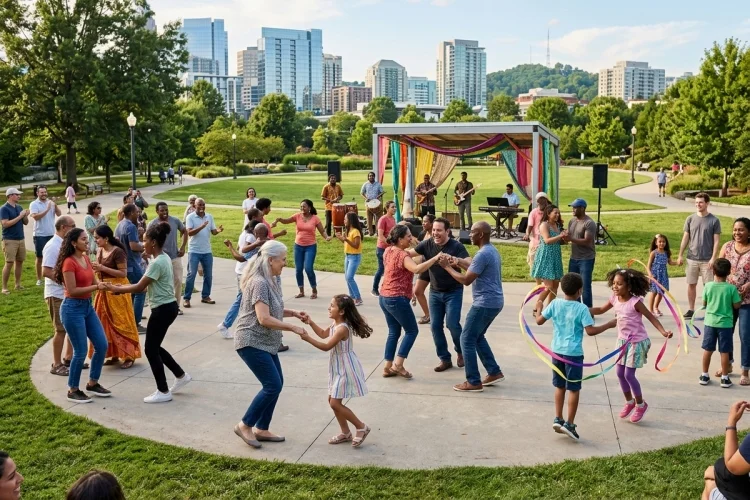
Group dancing requires people to notice one another. Participants must share space, follow common timing, and adjust their energy so the group can move as one.
Research has found that dancing in synchrony can increase feelings of social closeness. In one experimental study, coordinated movement helped strangers feel more connected, suggesting that shared timing may play an important role in social bonding.
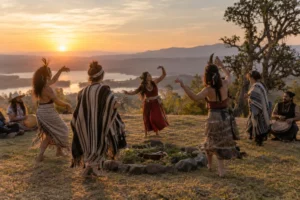
This helps explain why dance appears at weddings, festivals, ceremonies, parties, and community gatherings around the world. Moving together can create a feeling of belonging even when participants have different backgrounds or do not know each other well.
A dance class can offer a similar experience. Students gradually become familiar with one another, celebrate shared progress, and learn to manage the awkwardness of making mistakes in front of a group.
That social value can be especially meaningful for people who find competitive sports uncomfortable. Dance gives them another way to participate physically while connecting through music and creativity.
Dance Teaches Teamwork and Nonverbal Communication
Creating or performing group choreography involves cooperation. Dancers need to arrive at the correct place, maintain spacing, remember transitions, and respond when another performer makes an unexpected adjustment.
Partner dancing adds another layer of communication. Leading and following require attention, trust, timing, and sensitivity rather than simply pulling another person through a sequence.
Students also learn to communicate without words. A gesture, change of focus, pause, or shift in energy can express an emotion or signal what happens next.
These skills can carry into everyday relationships. Learning to observe carefully, respond to others, share responsibility, and accept feedback supports effective teamwork both inside and outside the studio.
Teachers can strengthen this benefit by asking students to create in pairs or small groups. Instead of allowing one person to control every decision, they can encourage each participant to contribute movement ideas and explain their choices.
Creative Dance Encourages Imagination and Problem-Solving
Dance is not only about copying a teacher. Creative movement asks students to make decisions about body shape, timing, direction, rhythm, and meaning.
A teacher might ask the class to create movement inspired by wind, crowded streets, excitement, or uncertainty. There is no single correct answer, so students must explore several possibilities and decide which one communicates the idea most effectively.
This process involves practical problem-solving. How can three dancers move through a small space without colliding? How can a repeated gesture become more dramatic? What movement quality matches a quiet section of music?
UNESCO’s Framework for Culture and Arts Education highlights the role of arts learning in developing creativity, critical thinking, social-emotional capabilities, and respect for cultural diversity.
Creative confidence often grows through repeated experimentation. Students learn that the first idea does not have to be perfect. They can test it, observe what happens, make changes, and try again.
That approach is valuable far beyond choreography. It teaches learners to remain curious when an answer is not immediately obvious.
Dance Provides a Safe Language for Expression
Some feelings are difficult to describe directly. Movement gives people another way to explore joy, frustration, fear, confidence, sadness, or excitement.
A dancer can communicate through posture, gesture, speed, tension, and stillness. Fast, open movement might feel celebratory, while slow, weighted actions may communicate uncertainty or grief.
This does not mean every class should become therapy. Dance education and dance therapy are different practices, and mental health concerns should be handled by appropriately qualified professionals.
However, creative dance can still give students space to recognise emotions and express ideas safely.
A systematic review of dance interventions found possible benefits in areas such as self-expression, self-confidence, body awareness, and self-perception, while also noting that the research varied considerably in quality and design.
A supportive teacher makes this process easier by avoiding humiliation, unhealthy comparison, or narrow expectations about what a dancer’s body should look like.
Learning Choreography Challenges Memory and Attention
Dance requires the brain to process several things at once. A student may need to remember a sequence, follow the rhythm, maintain alignment, travel in the correct direction, and stay aware of the group.
These combined demands challenge working memory, attention, and movement planning. Each new phrase asks the learner to connect verbal instructions, visual demonstrations, musical cues, and physical sensations.
A systematic review comparing dance with other types of structured physical activity found preliminary evidence of benefits in areas including motivation, memory, social cognition, and psychological well-being.
The researchers also emphasised that outcomes differed between studies, so the findings should be interpreted carefully.
Beginners can support this learning by dividing routines into short sections. Practising four or eight counts at a time is usually more effective than repeating an entire dance while making the same mistakes.
Inclusive Teaching Makes the Benefits More Accessible
Dance supports development most effectively when learners feel safe enough to participate. People enter classes with different abilities, cultures, body structures, confidence levels, and previous experiences.
Inclusive teaching offers different ways to perform a movement. A jump might become a controlled rise, a floor sequence may be adapted to a chair, and choreography can be adjusted without removing its musical or expressive purpose.
Teachers should also explain the cultural background of the styles they introduce. Dance development includes learning how movement connects with history, identity, and community—not only mastering visible steps.
Progress should be measured in several ways. Better timing, greater confidence, thoughtful creative decisions, improved cooperation, and willingness to participate are all meaningful achievements.
The goal is not to make every student move identically. It is to give each learner the tools to develop from their own starting point.
Dance supports physical, social, and creative development by combining movement, communication, imagination, and shared experience.
It can improve coordination, balance, body awareness, and fitness while encouraging teamwork, confidence, expression, and flexible thinking. These benefits do not require professional-level training.
A beginner class, school workshop, cultural dance group, or short creative movement activity can provide a valuable starting point when it is taught safely and inclusively. Choose a style or programme that feels welcoming and appropriate for your experience.
Pay attention not only to the steps you learn but also to how you solve problems, respond to others, and express ideas. Every dance session can become an opportunity to strengthen the body, connect with people, and develop a more confident creative voice.