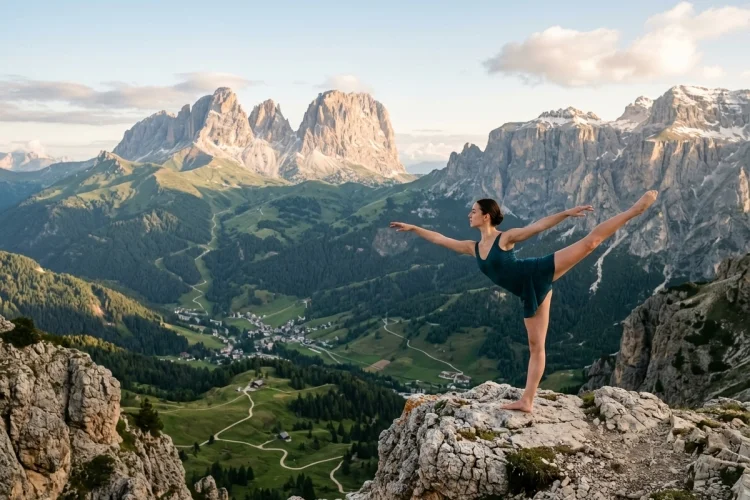
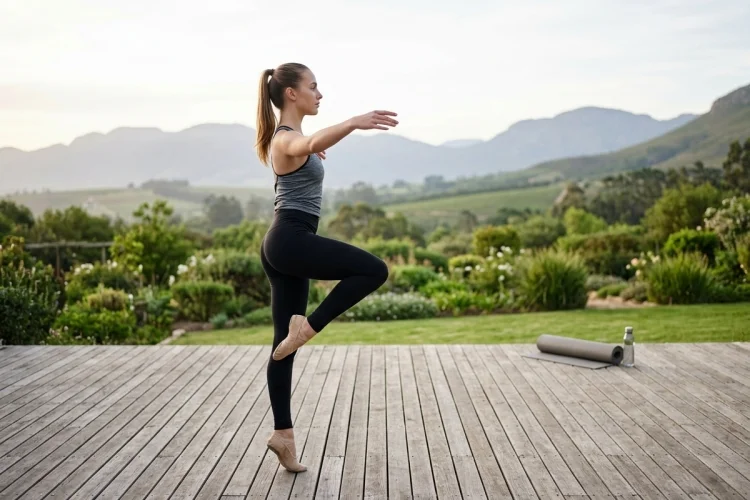
Holding a beautiful pose is easy-until you have to stand on one leg, rise onto the ball of your foot, move your arms, and stay perfectly in time with the music. Balance may look effortless on stage, but it is one of the most complex skills a dancer develops.
Learning how to improve balance for dance is not only about standing still without wobbling. Dancers must remain stable while turning, jumping, changing direction, transferring weight, and reacting to other performers.
This requires coordination between the eyes, inner ear, nervous system, muscles, and joints. The good news is that balance is trainable.
You do not need to be naturally steady or have years of experience to improve it. With consistent practice, stronger supporting muscles, and dance-specific exercises, your movements can become more controlled and confident.
Whether you are studying ballet, jazz, contemporary dance, hip-hop, ballroom, or another style, the following strategies will help you build a stronger foundation.
Understand How Balance Works in Dance
Balance is your ability to control your centre of mass over your base of support. When both feet are on the floor, that base is relatively wide. When you lift one leg, rise onto demi-pointe, or land from a jump, it becomes much smaller.
Your body relies on three main systems to stay upright: vision, the vestibular system in the inner ear, and proprioception.
Proprioception is your ability to sense where your body is positioned without constantly looking at it. These systems work together to make small corrections before you fall noticeably off balance.
Dance balance can be static or dynamic. Static balance is used when holding a pose, while dynamic balance helps you remain controlled during movement.
A dancer may be excellent at holding a position but struggle during turns or weight transfers. That is why an effective balance programme should include both stillness and movement.
Begin with Better Alignment
Good balance starts with how your body is organised. If your ribs, pelvis, knees, and feet are poorly aligned, your muscles must work harder to keep you upright.
Imagine your head floating above your shoulders while your rib cage rests naturally over your pelvis. Avoid pushing your chest forward, gripping your abdominal muscles aggressively, or locking your knees.
Your body should feel supported rather than stiff. Excessive tension can make it harder to respond when your weight shifts.
Check Your Supporting Leg
When balancing on one leg, keep your standing knee aligned with your toes. Avoid allowing the knee to collapse inward or the foot to roll heavily toward its inner edge.
Practise in front of a mirror, but do not depend on it completely. IADMS guidance notes that dancers should also learn to feel their alignment and movement rather than using visual feedback as their only reference.
Strengthen Your Feet, Ankles, and Hips
Your feet and ankles provide constant information about the floor. Weakness or poor control in this area can make the rest of the body compensate.
Begin with slow calf raises. Stand with your feet parallel, rise onto the balls of your feet, pause briefly, and lower with control. Avoid rolling toward the little toes or allowing the ankles to wobble outward.
You can then try the exercise on one leg while lightly touching a wall or chair. Start with a small number of controlled repetitions rather than rushing through a large set.
Hip strength is equally important. The muscles around the hips help keep the pelvis level when one foot leaves the floor. Side leg lifts, bridges, controlled squats, and lateral band walks can support this stability.
Research on supplemental strength and conditioning for dancers has found improvements in qualities including strength, power, coordination, proprioception, and dynamic balance. However, exercises should complement dance training rather than replace technique practice.
Develop Core Control Without Becoming Rigid
Your core includes more than the visible abdominal muscles. It involves the muscles around the trunk, pelvis, spine, and hips that help transfer force between the upper and lower body.
A stable core allows your arms and legs to move without pulling your torso off balance. This becomes especially important during extensions, turns, jumps, and fast directional changes.
Planks, dead bugs, bird dogs, and slow mountain climbers can help develop trunk control. Focus on breathing normally and maintaining your alignment instead of holding your breath.
Dance-specific core training can also be useful. For example, stand on one leg and slowly move your arms through different positions. This teaches your torso to remain organised while your limbs change your centre of mass.
Core control should not make your dancing look stiff. The goal is to create enough support for the movement while allowing the breath, spine, and upper body to remain expressive.
Practise Single-Leg Balance Progressively
Standing on one leg is one of the simplest and most useful exercises for dance balance. However, repeating the same easy position every day will eventually stop being challenging.
Begin by standing near a stable support. Place your weight completely over one foot and lift the other foot slightly from the floor. Hold the position for 20 to 30 seconds while keeping your breathing relaxed.
Once that becomes comfortable, make the exercise more difficult. You can change the position of the free leg, move your arms, rise onto demi-pointe, turn your head, or perform a slow plié.
A systematic review of single-leg balance training found that this type of practice can improve balance control. However, improvements are often closely connected to the tasks being trained, so dancers should use several positions and movement patterns.
Use Unstable Surfaces Carefully
A folded towel, foam pad, or balance cushion can increase the challenge by reducing reliable feedback from the floor. Keep a wall or barre nearby, especially when beginning.
Unstable surfaces can be useful, but they are not automatically better than the floor. Most dance movements happen on a firm surface, so stable-ground exercises should remain an important part of your routine.
Eyes-closed balance work can also challenge proprioception, but it should only be attempted in a safe position with support nearby. Dancers still need to train their visual, vestibular, and proprioceptive systems rather than relying on only one of them.
Make Balance Training Specific to Dance
General exercises build a foundation, but balance improves most effectively when practice resembles the skills you want to perform.
A ballet dancer might hold passé, practise relevés, or move slowly from fifth position into arabesque. A contemporary dancer could work on controlled floor-to-standing transitions, tilts, and off-centre positions.
Hip-hop dancers may practise freezes, quick weight changes, and controlled stops after energetic movements. Ballroom dancers can rehearse balance while maintaining posture, partner connection, and travelling footwork.
A systematic review of theatrical dance found that balance is closely related to dance performance, although researchers also noted differences in testing methods and training approaches.
This suggests that one generic balance test cannot fully represent the demands of every dance genre.
Improve Balance During Turns
Turns require more than the ability to stand on one leg. You must organise the preparation, transfer your weight, control rotational force, and finish without losing your posture.
Practise the beginning and ending positions separately before attempting multiple rotations. Make sure your weight arrives fully over the supporting foot before turning.
Spotting may help you maintain orientation, but it cannot fix poor alignment or an unstable supporting leg. A clean single turn is more valuable than several uncontrolled rotations.
Warm Up and Manage Fatigue
Balance usually becomes less reliable when the body is cold or tired. A proper warm-up prepares the muscles, joints, nervous system, and cardiovascular system for the demands of dancing.
Begin with gentle continuous movement to raise your body temperature. Follow this with joint mobilisation, dynamic stretches, weight shifts, direction changes, and simple single-leg positions.
IADMS explains that an effective warm-up can improve nerve signalling, coordination, balance, and proprioception. It also recommends using dynamic movement rather than relying on long static stretches immediately before dancing.
Fatigue matters as well. When your supporting muscles become tired, technique may start to change. You might grip your toes, lock your knee, lean your torso, or rush through transitions.
Practise difficult balance exercises early enough in your session that you can perform them with control. Stop when your form repeatedly breaks down, and increase the difficulty gradually over several weeks.
Pain is not a normal part of balance training. Sharp pain, repeated ankle instability, dizziness, or balance problems following an injury should be assessed by a qualified healthcare professional.
Create a Simple Balance Routine
You do not need an hour-long workout. A focused routine of around 10 minutes can be added before dance practice two or three times per week.
Begin with ankle circles and slow weight shifts. Continue with parallel calf raises, single-leg holds, a small controlled plié on one leg, and a dance-specific position from your chosen style.
Finish by practising a transition, such as moving from two feet to one, turning slowly, or landing softly from a small jump. Keep the quality high and rest whenever your alignment begins to change.
Track one simple measurement each week. You might record how long you can hold a position, how many controlled relevés you can perform, or whether you can finish a turn without stepping out of it.
Progress is not always perfectly steady. Sleep, stress, previous training, flooring, footwear, and fatigue can all influence how stable you feel on a particular day.
Improving balance for dance requires more than repeatedly standing on one leg. Strong balance develops through good alignment, controlled weight transfer, foot and ankle strength, hip stability, core support, proprioception, and dance-specific practice.
Start with simple exercises and make them gradually more challenging. Practise on both sides, reduce your dependence on the mirror, and prioritise control over difficult tricks. Most importantly, give your body time to adapt.
Choose two or three exercises from this guide and add them to your next warm-up. With a few minutes of focused training several times a week, you can build the stability needed for cleaner turns, stronger poses, safer landings, and more confident dancing.