A dancer floats across the stage, turns effortlessly, and lands as though gravity has briefly stopped working. To the audience, the performance may look natural and spontaneous.
Behind those few graceful seconds, however, are usually months or even years of technical training, physical conditioning, creative decisions, and repeated practice.
This combination explains why dance is both an art form and a physical discipline. Like painting, music, or theatre, dance communicates ideas and emotions. Unlike most artistic media, however, the dancer creates the work through their own moving body.
Every jump, pause, gesture, and change of direction requires both expressive intention and physical control. Understanding this dual nature can completely change how we watch and practise dance. It is not simply exercise performed with music, nor is it creativity without structure.
Dance exists where imagination meets technique, and where emotional expression depends on strength, coordination, timing, and endurance. Whether you are watching ballet, hip-hop, contemporary dance, salsa, or a traditional community performance, both sides are always present.
Dance Uses Movement as an Artistic Language
Dance is an art form because movement can communicate meaning. A dancer may express joy, grief, anger, freedom, uncertainty, or excitement without speaking a single word.
The core elements of dance include the body, space, time, and energy. Dancers combine these elements to shape what an audience sees and feels.
A slow movement performed with heavy energy, for example, creates a very different impression from the same movement performed quickly and lightly. Movement can also carry symbolic meaning.
A repeated gesture might represent memory, conflict, work, prayer, or connection. In narrative dance, movements help tell a recognisable story. In abstract choreography, they may create an atmosphere or invite viewers to form their own interpretations.
This makes dance similar to visual art. A painter arranges colour, shape, and texture, while a choreographer arranges bodies, timing, pathways, and dynamics.
Creativity Turns Technique into Expression
Technique gives dancers a physical vocabulary, but creativity determines how that vocabulary is used. Two dancers can perform exactly the same steps and still create very different experiences.
One performer may emphasise softness and vulnerability. Another might use sharper movements and stronger facial expression. Although the choreography remains the same, their interpretation changes its emotional impact.
Choreographers make creative choices about formations, music, costumes, lighting, rhythm, and relationships between performers. Even silence can be used intentionally. A sudden pause after a fast sequence may create tension because the audience expects the movement to continue.
Improvisation reveals this artistic process particularly clearly. Instead of following a fixed routine, dancers make movement decisions in real time. They listen, react, experiment, and build physical ideas from whatever is happening around them.
Dance Preserves Culture and Identity
Dance is not only a personal art form. It can also represent the history, beliefs, values, and identity of an entire community.
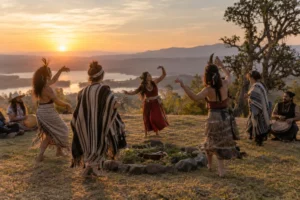
Traditional dances are often connected to weddings, harvests, religious ceremonies, seasonal celebrations, storytelling, and major life events. The movements may be passed from one generation to the next, preserving knowledge that is not always written down.
UNESCO includes traditional dance within the performing arts domain of intangible cultural heritage. Costumes, musical instruments, performance spaces, and cultural practices surrounding a dance may also form part of that heritage.
This cultural dimension is one reason dance should be approached with curiosity and respect. Learning a traditional style involves more than copying its steps. It also means understanding who created it, why it is performed, and what its movements mean to the community.
The Physical Demands Behind a Performance
While dance communicates artistically, it also places serious demands on the body. Dancers need muscular strength, mobility, coordination, balance, speed, power, and cardiovascular endurance.
A ballet dancer must generate enough power to jump while maintaining precise alignment. A breakdancer may support their body weight through their arms and shoulders. A ballroom dancer needs stamina to maintain posture and timing throughout an energetic routine.
Contemporary performers frequently move between the floor and standing positions, requiring core control and whole-body coordination. Even slow choreography can be physically difficult because holding a position or moving with extreme control demands sustained muscular effort.
Research supports the importance of physical conditioning in dance. A 2024 systematic review and meta-analysis found that strength and conditioning programmes improved qualities including lower-body power, upper- and lower-body strength, and flexibility in dancers.
Technique Makes Difficult Movement Look Effortless
Professional dancers often make movement appear easy, but this illusion is created through disciplined technical training. Technique teaches the body how to move efficiently, safely, and consistently.
Training usually includes posture, alignment, balance, weight transfer, rhythm, coordination, and movement patterns associated with a particular style. Ballet dancers practise positions and transitions, while hip-hop dancers may develop grooves, isolations, footwork, and control of musical accents.
Repetition helps these skills become more automatic. When dancers no longer need to think about every basic action, they can focus more attention on musicality and emotional expression.
Technique also gives performers greater artistic freedom. A dancer with strong control has more choices. They can intentionally move off balance, change dynamics, extend a pause, or perform a difficult combination without losing the meaning behind it.
Discipline Supports Both Performance and Safety
Dance training requires consistency rather than occasional bursts of effort. Dancers often repeat short sections many times, analyse their mistakes, and make extremely small adjustments.
This process develops patience, concentration, and body awareness. Progress may involve improving the placement of a foot, changing the direction of the eyes, or arriving on a musical beat a fraction earlier.
Physical discipline also includes recovery. More practice is not always better. Training volume, intensity, sleep, nutrition, strength work, and rest all affect a dancer’s ability to perform.
A systematic review of dance training-load research noted that higher levels of training have been associated with increased injury risk, highlighting the importance of monitoring workload rather than ignoring fatigue.
Beginners can apply the same principle. Warm up gradually, increase practice time slowly, and stop when movement causes sharp pain. A useful session does not need to leave you completely exhausted.
Dance Can Improve Physical Fitness
Dance can provide meaningful physical activity while feeling more engaging than a conventional workout. Depending on the style and class structure, it may raise the heart rate, challenge the muscles, and improve coordination, balance, and mobility.
A systematic review involving 28 studies and 1,276 participants found that dance interventions produced improvements in areas including body composition, blood biomarkers, and musculoskeletal function.
he review also found that some cardiovascular and mobility outcomes were comparable with other structured exercise programmes.
The World Health Organization states that regular physical activity can support cardiovascular and muscular fitness, mental well-being, healthy body weight, and quality of life. Dance can contribute to those benefits when practised regularly at an appropriate intensity.
However, not every dance class provides the same workout. A technical lesson with frequent explanations may contain less continuous activity than an energetic rehearsal or dance-fitness session. Your physical results will depend on the style, pace, duration, and consistency of your practice.
How Beginners Can Develop Both Sides of Dance
Beginners often focus so strongly on memorising steps that they forget to communicate anything. A better approach is to practise technique and expression separately before combining them.
Start by learning a short sequence slowly. Pay attention to balance, timing, and weight transfer. Once the movement feels familiar, repeat it with different qualities—soft, heavy, playful, nervous, or powerful.
You can also record yourself to see whether your intention is visible. Ask a practical question: if someone watched without hearing the music, would they still notice a clear emotion or movement quality?
Physical preparation matters too. Basic exercises such as squats, calf raises, gentle mobility work, balance practice, and core training can support dance technique. The goal is not to build a particular body shape but to make movement more controlled and sustainable.
Most importantly, accept that artistry and athletic ability develop gradually. You do not need to master every step before expressing yourself, and you do not need professional-level fitness before beginning to dance.
Dance is both an art form and a physical discipline because creativity and physical skill are inseparable within it. Movement becomes art when it communicates emotion, tells a story, explores an idea, or carries cultural meaning.
That expression becomes possible through technique, strength, coordination, stamina, and consistent practice. Learning to dance therefore involves more than memorising choreography.
It means training the body while developing imagination, musicality, confidence, and awareness. Beginners can start by choosing one accessible style, practising simple movements regularly, and exploring how different energies change their meaning.
Put on a favourite song, learn a few basic steps, and begin discovering what your body can express.